

Key Takeaways
- Florida business law protects companies from unfair competition, contract breaches, and partner disputes.
- Acting early saves time, money, and business relationships.
- An experienced business attorney helps you assess risk and choose the right legal strategy.
Most entrepreneurs assume that forming an LLC automatically shields them from every business risk. That assumption gets tested in court more often than you’d think. Understanding what is an LLC, how it actually works, and what it requires from you as an owner is the difference between real protection and a false sense of security. This guide covers the LLC meaning from the ground up, explains how the formation process works in Florida, and gives you the practical context you need to make a confident decision about your business structure.
Table of Contents
- Key takeaways
- What is an LLC and how does it work legally
- How the IRS taxes your LLC
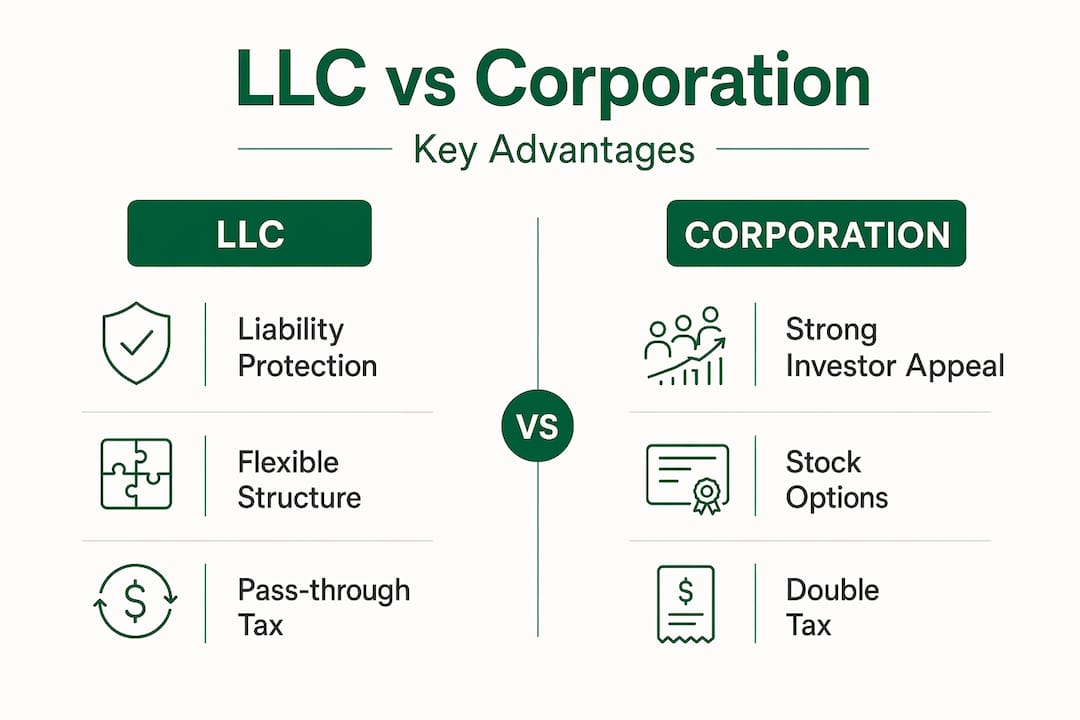
- Benefits of forming an LLC vs. other structures
- How to start an LLC in Florida
- Common pitfalls that can cost you your LLC protection
- My take on what most new LLC owners get wrong
- Ready to form your LLC the right way?
- FAQ
Key takeaways
| Point | Details |
|---|---|
| LLC stands for Limited Liability Company | It’s a state-formed legal entity that separates your personal assets from business debts and lawsuits. |
| Tax flexibility is a major advantage | LLCs default to pass-through taxation but can elect corporate tax treatment using IRS Form 8832 or 2553. |
| Florida has specific formation requirements | You must file Articles of Organization, designate a registered agent, and pay state fees to legally form your LLC. |
| Compliance is ongoing, not one-time | Failing to maintain proper records and separation of finances can void your liability protection entirely. |
| An operating agreement is non-negotiable | Even single-member LLCs need one to define governance rules and strengthen legal protections. |
What is an LLC and how does it work legally
LLC stands for Limited Liability Company. It is a business entity created under state law that gives its owners, called members, a legal separation between their personal finances and the obligations of the business. If your LLC gets sued or cannot pay its debts, your personal bank account, home, and car are generally off the table. That protection is the core reason 42.9% of small businesses in the U.S. operate as LLCs.
In Florida, LLCs are governed by the Florida Revised Limited Liability Company Act, found in Chapter 605 of the Florida Statutes. This law defines how LLCs are formed, managed, and dissolved within the state. Unlike a sole proprietorship or general partnership, where you and the business are legally the same person, an LLC is recognized as its own legal entity. That distinction matters enormously the moment something goes wrong.
Here is what makes the LLC structure distinct from other options:
- Limited personal liability. Members are not personally responsible for business debts or legal judgments, with limited exceptions.
- Flexible management. You can run the LLC yourself as a member-managed entity or appoint managers to handle operations.
- Fewer formalities. Unlike corporations, LLCs are not required to hold annual shareholder meetings or maintain detailed corporate minutes.
- Pass-through taxation by default. Profits and losses flow directly to members’ personal tax returns without a separate corporate tax layer.
An LLC combines advantages of corporations and partnerships, giving you liability protection without the rigid structure that corporations require. For most South Florida entrepreneurs running a small or growing business, that combination is exactly what they need.
How the IRS taxes your LLC
The IRS does not have a specific tax category for LLCs. Instead, it defaults to taxing them based on how many members they have. A single-member LLC is treated as a disregarded entity by default, meaning the IRS ignores the LLC itself and taxes the owner directly on their personal return. A multi-member LLC is taxed as a partnership by default, with each member reporting their share of income and losses.
These defaults work fine for many businesses. But they are not always the most tax-efficient setup, especially as your revenue grows. You have two options to change how your LLC is taxed:
- Form 8832 lets your LLC elect to be taxed as a C corporation. This can make sense for businesses retaining significant profits inside the company.
- Form 2553 lets your LLC elect S corporation status, which can reduce self-employment taxes for owners who pay themselves a reasonable salary.
The catch with Form 8832 is timing. The filing window is 75 days retroactive or 12 months prospective from the desired effective date. Miss that window and you will need to file for late election relief with documented reasonable cause. That is not a process you want to navigate without professional help.
Pro Tip: If your LLC is generating consistent net profit above $80,000 per year, ask a tax professional to model the S corp election. The self-employment tax savings alone can be significant for South Florida business owners.
Pass-through taxation is one of the strongest benefits of forming an LLC, but it is not a blanket advantage for every situation. The right tax structure depends on your revenue, how you pay yourself, and your long-term plans for the business.
Benefits of forming an LLC vs. other structures
When South Florida entrepreneurs compare their options, the LLC consistently stands out. The table below captures the most relevant differences:
| Feature | Sole Proprietorship | LLC | Corporation |
|---|---|---|---|
| Personal liability protection | None | Yes | Yes |
| Double taxation | No | No | Yes (C corp) |
| Management flexibility | Full | High | Limited by bylaws |
| Formation complexity | None | Low | High |
| Ongoing compliance burden | Minimal | Moderate | High |
Operating without an LLC puts your personal assets directly at risk. 85% of LLCs operate with no employees other than the owner, yet they retain the same liability protection as much larger corporations. That is a meaningful advantage for a solo consultant, freelancer, or small shop owner in Miami or Fort Lauderdale.

Compared to a C corporation, the LLC avoids double taxation. A corporation pays taxes on its profits, and then shareholders pay taxes again on dividends. An LLC skips that first layer entirely. For an entrepreneur who wants to take money out of the business regularly, that matters.
For a deeper look at how these entities compare side by side, the LLC vs. corporation breakdown at Fornarolegal covers the decision points in detail.
One misconception worth addressing: forming an LLC does not mean you can ignore business formalities. The protection only holds if you treat the LLC as a separate entity. That means separate bank accounts, separate contracts, and separate records.
Pro Tip: Open a dedicated business checking account the same week you form your LLC. It is one of the simplest things you can do to protect your personal assets long-term.
How to start an LLC in Florida
The LLC registration process in Florida is straightforward if you know the steps. Here is how it works:
-
Choose a compliant business name. Your name must include “Limited Liability Company,” “LLC,” or “L.L.C.” It must also be distinguishable from existing entities registered in Florida. Search the Florida Division of Corporations database before committing to a name.
-
Designate a registered agent. Florida requires every LLC to have a registered agent with a physical address in the state. This person or service receives official legal documents and state correspondence on your behalf. Registered agent services also protect member privacy by keeping your personal address off public filings.
-
File Articles of Organization. Submit this document to the Florida Secretary of State, either online or by mail. The filing fee is $125. This is the official act that creates your LLC under Florida law.
-
Draft an operating agreement. Florida does not legally require one, but skipping it is a mistake. An operating agreement establishes internal rules for how the LLC is managed, how profits are distributed, and what happens if a member leaves. Without it, courts default to state law, which may not reflect your intentions.
-
Obtain an EIN. An Employer Identification Number from the IRS is required if you have employees or elect corporate tax treatment. Even if neither applies, having an EIN lets you open a business bank account and keeps your Social Security number off vendor paperwork.
-
Maintain financial separation. From day one, keep business and personal money completely separate. This is not just good practice. It is legally necessary to preserve your liability protection.
Realistically, total first-year costs for a Florida LLC run between $700 and $1,000 when you factor in registered agent services, operating agreement drafting, and any required local business licenses. The state filing fee alone is $125, but that number understates what you will actually spend to set things up properly.
South Florida entrepreneurs should also register locally in Florida rather than in states like Delaware or Wyoming. Registering out of state adds compliance layers and costs without delivering the benefits that out-of-state registration provides for large corporations. For a business operating in Miami-Dade, Broward, or Palm Beach County, Florida is the right home for your LLC.
For a thorough walkthrough of the full formation process, the Florida business formation guide at Fornarolegal is a solid starting point.
Pro Tip: Do not wait until you have clients or revenue to form your LLC. The moment you start operating, you are exposed to liability. Form the entity first, then build the business.
Common pitfalls that can cost you your LLC protection
Forming an LLC is the beginning, not the finish line. Many owners discover this the hard way when a lawsuit tests whether their liability protection actually holds.
The most dangerous mistake is commingling personal and business finances. When courts see shared bank accounts, personal expenses paid from business funds, or business income deposited into personal accounts, they can pierce the corporate veil. That means your personal assets become fair game despite the LLC structure.
Other risks that Florida LLC owners commonly face include:
- Missing the annual report deadline. Florida requires LLCs to file an annual report with the state. Missing it results in late fees and eventually administrative dissolution of your LLC.
- Skipping tax elections. Defaulting to disregarded entity or partnership status is not always wrong, but doing it without reviewing the tax implications is a missed opportunity at best and a costly mistake at worst.
- Operating without a written operating agreement. Without one, disputes between members get resolved by Florida’s default statutory rules, which may not align with what you and your partners agreed to verbally.
- Neglecting local licensing. Florida LLCs may still need county or city business licenses depending on their industry and location. Miami-Dade and Broward have their own requirements.
Good business governance practices including a current operating agreement and clean financial records significantly reduce the risk of veil-piercing claims. Strict compliance with state LLC statutes also protects you from penalties and keeps your tax elections intact.
My take on what most new LLC owners get wrong
I have worked with South Florida entrepreneurs for over 20 years, and the pattern I see most often is this: people treat LLC formation as a box to check rather than a foundation to build on.
They file the Articles of Organization, get the confirmation email, and assume the hard part is done. What they miss is that the LLC is only as strong as the habits they build around it. I have seen clients lose their liability protection not because they did anything obviously wrong, but because they never opened a separate business account or never documented how profits were being split among members.
The other thing I tell clients directly: an LLC is not always the right answer. For some businesses, particularly those with consistent profits above a certain threshold, an S corporation election makes more sense from a tax standpoint. I have watched entrepreneurs pay tens of thousands of dollars in unnecessary self-employment taxes because no one told them that option existed.
My honest advice is to get the structure right before the business gets complicated. It is far cheaper to build the foundation properly at the start than to fix it after a dispute or an IRS audit forces your hand. The LLC is a powerful tool. But like any tool, it only works if you use it correctly.
— Matthew
Ready to form your LLC the right way?
Fornarolegal works with entrepreneurs and small business owners across South Florida to handle LLC formation, operating agreements, registered agent services, and ongoing legal compliance. Whether you are starting from scratch or need to clean up an existing structure, Matthew Fornaro brings over 20 years of court-tested experience to every client relationship.

Getting the legal foundation right from the start protects everything you build afterward. If you are ready to move forward or just want to understand your options, contact Fornarolegal to schedule a consultation. You can also review the business etiquette and conduct standards that help new LLC owners establish credibility and operate professionally from day one.
FAQ
What does LLC stand for?
LLC stands for Limited Liability Company. It is a legal business entity formed under state law that protects its owners, called members, from personal liability for business debts and lawsuits.
How is an LLC different from a sole proprietorship?
A sole proprietorship offers no separation between you and your business, meaning personal assets like your home and savings are at risk if the business is sued. An LLC creates a legal barrier between your personal finances and business obligations.
How much does it cost to start an LLC in Florida?
The Florida state filing fee is $125, but total first-year costs typically range between $700 and $1,000 when you include registered agent services, operating agreement drafting, and local licensing requirements.
Does an LLC protect me from all business liability?
No. An LLC protects your personal assets from most business debts and lawsuits, but courts can pierce that protection if you commingle personal and business finances or fail to follow proper governance practices.
Can an LLC be taxed as an S corporation in Florida?
Yes. By filing IRS Form 2553, an LLC can elect S corporation tax treatment, which can reduce self-employment taxes for owners who pay themselves a reasonable salary. Timing requirements apply, so consult a tax professional before filing.
Recommended
- Comprehensive Guide to Forming a Business in Florida: Legal Insights for Entrepreneurs » Matthew Fornaro, P.A.
- Navigating Florida’s Unique Business Law Landscape: Essential Insights for Entrepreneurs » Matthew Fornaro, P.A.
- Business Law News & Legal Insights | Coral Springs Attorney » Matthew Fornaro, P.A.
- LLC vs. INC — Which Business Entity is Best for My Company? » Matthew Fornaro, P.A.

