

Key Takeaways
- Florida business law protects companies from unfair competition, contract breaches, and partner disputes.
- Acting early saves time, money, and business relationships.
- An experienced business attorney helps you assess risk and choose the right legal strategy.
Business due diligence is the structured investigative process a buyer, investor, or partner uses to verify facts and uncover hidden risks before finalizing a major transaction. In practice, it is the difference between a deal that builds your business and one that buries it. The process typically runs 30 to 90 days after a preliminary agreement is signed but before contracts close. For small business owners, startups, and entrepreneurs, understanding what is business due diligence is not optional. It is the foundation of every sound acquisition, partnership, or investment decision.
What is business due diligence and what does it cover?
Business due diligence is defined as a pre-contractual investigation that validates the claims a seller or partner makes about their business. The goal is not just to confirm numbers. It is to surface every material risk that could affect the deal’s value or your legal exposure after closing.
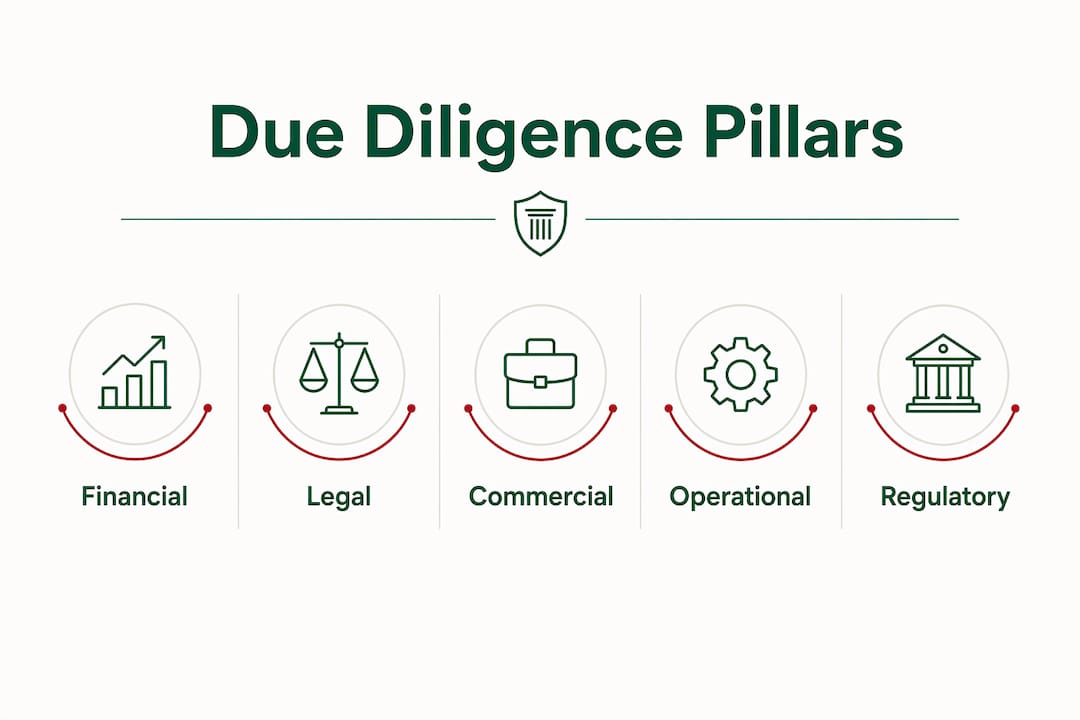
Due diligence covers five core pillars: financial, legal, commercial, operational, and regulatory or compliance review. Each pillar targets a different category of risk. Together, they give you a complete picture of what you are actually buying or partnering with.

| Pillar | Primary focus |
|---|---|
| Financial | Revenue accuracy, liabilities, cash flow, and debt obligations |
| Legal | Contracts, pending litigation, IP ownership, and title issues |
| Commercial | Market position, customer concentration, and competitive threats |
| Operational | Systems, staff, supply chain, and technology infrastructure |
| Regulatory/Compliance | Licenses, permits, environmental obligations, and tax filings |
Due diligence is multidisciplinary, covering finance, legal, operational, and cultural aspects rather than functioning as a simple financial audit. That distinction matters because financial audits miss pending lawsuits, broken vendor contracts, and workforce problems that can destroy deal value after closing. You need finance experts, attorneys, and operational consultants working together, not just one accountant reviewing spreadsheets.
Pro Tip: Assign a dedicated due diligence lead who coordinates all workstreams. Without one point of contact, findings from legal, financial, and operational reviews often stay siloed and never get cross-referenced.
Why is thorough due diligence essential before business transactions?
Skipping or rushing due diligence is one of the most expensive mistakes a business owner can make. Thorough due diligence reduces the risk of failed mergers and acquisitions caused by hidden liabilities or poor strategic fit. That risk is not theoretical. Deals collapse after closing when buyers discover undisclosed debts, unresolved lawsuits, or customer contracts that evaporate the moment ownership changes.
Uncovering a pending lawsuit or undisclosed liabilities during due diligence provides critical leverage to renegotiate or hold back purchase funds. A buyer who finds a $200,000 tax lien buried in the seller’s records does not have to walk away. They can demand a price reduction, an escrow holdback, or stronger indemnification language in the purchase agreement.
The legal dimension of due diligence carries its own weight. Legal due diligence findings form the basis of “Representations and Warranties” in purchase agreements and directly affect indemnification rights if problems surface after the transaction closes. In plain terms: what your attorney documents during due diligence becomes your legal protection if the seller lied or omitted something material.
Due diligence also shapes negotiation. Buyers who enter a deal with verified data negotiate from strength. Those who accept seller projections at face value negotiate from hope. The importance of due diligence shows up most clearly when a buyer uses a discovered red flag to renegotiate price, restructure payment terms, or require the seller to resolve a compliance issue before closing.
How to conduct effective business due diligence
The due diligence process steps follow a predictable sequence once a letter of intent or preliminary agreement is signed. The clock starts there, and the 30 to 90 day window moves fast.
-
Organize a due diligence team. Identify your attorney, accountant, and any operational or industry specialist you need. Brief them on the deal structure and your primary concerns before they start.
-
Build a document request list. Send the seller a formal request covering financial statements for the past three years, tax returns, all material contracts, employment agreements, licenses, permits, and any pending or threatened litigation.
-
Cross-check every claim against external sources. Effective due diligence requires proactive cross-checking beyond seller-provided data, including external records and industry benchmarks. Pull public court records, UCC filings, and state licensing databases independently. Do not rely on what the seller hands you.
-
Conduct site visits and management interviews. Financial documents do not reveal culture, staff morale, or operational dysfunction. Walk the facility. Talk to key employees. Ask open-ended questions about what keeps them there and what frustrates them.
-
Analyze customer and supplier concentration. A business where 60% of revenue comes from one customer is a fundamentally different risk than one with 200 diversified accounts. Verify contract terms and renewal dates directly.
-
Document every finding in writing. Accurate documentation of due diligence findings is the foundation of your legal rights post-transaction. If a dispute arises after closing, your documented findings determine what you can claim and what you cannot.
-
Prepare a findings summary and decision memo. Consolidate all findings into a single report that ranks risks by severity. Use it to decide whether to proceed, renegotiate, or walk away.
Pro Tip: If you are the seller, conduct “reverse due diligence” on your own business before listing it. Sellers who self-assess early fix vulnerabilities before buyers find them, which improves valuation and speeds the transaction timeline significantly.
A useful resource for aggressive fact-checking tactics beyond standard document review is available for buyers who need to go deeper than surface disclosures.
What are the common challenges during due diligence?
Even well-organized due diligence runs into obstacles. Knowing the most common ones in advance lets you plan around them rather than react to them mid-process.
-
Incomplete or disorganized seller disclosures. Many small business sellers have never been through a formal sale process. Their records are incomplete, inconsistently formatted, or missing entirely. Request documents early and set firm deadlines for delivery.
-
Complex legal issues that require specialist review. Intellectual property ownership disputes, environmental liabilities, and multi-state regulatory compliance each require attorneys with specific expertise. A general business attorney may miss a material issue in a specialized area.
-
Customer and employee uncertainty. Key employees may leave when they learn the business is for sale. Major customers may renegotiate or exit. Address these risks by reviewing employment agreements and customer contracts for change-of-control provisions.
-
Cultural and operational mismatches. Two businesses can look compatible on paper and clash badly in practice. Assess management style, decision-making processes, and workforce expectations as part of your operational review.
-
Time pressure from sellers. Sellers often push to accelerate closing. Resist artificial urgency. A compressed timeline is one of the most common causes of missed red flags. Your litigation risk awareness depends on having enough time to look thoroughly.
The solution to most of these challenges is the same: supplement seller-provided information with independent research, engage specialists early, and document everything your team uncovers. A business contract review checklist gives you a structured starting point for the legal records portion of this work.
Key Takeaways
Effective business due diligence is the single most reliable way to protect your investment, negotiate from strength, and avoid costly post-transaction disputes.
| Point | Details |
|---|---|
| Five core pillars | Cover financial, legal, commercial, operational, and regulatory areas without exception. |
| Cross-check independently | Never rely solely on seller-provided documents; verify claims against public records and benchmarks. |
| Document every finding | Written records of due diligence findings protect your legal rights if disputes arise after closing. |
| Use red flags as leverage | Discovered liabilities give you grounds to renegotiate price, demand escrow, or require seller remediation. |
| Sellers benefit too | Reverse due diligence before listing improves valuation and reduces the time to close. |
What I have learned about due diligence after 20 years of business transactions
Most entrepreneurs treat due diligence as a checklist they have to complete before the lawyers will let them sign. That framing is wrong, and it costs people money.
The deals I have seen go sideways almost always share one pattern: the buyer accepted the seller’s narrative and used due diligence to confirm it rather than challenge it. Real due diligence starts with skepticism. You are not trying to prove the deal is good. You are trying to find out if it is not.
The most valuable moments in any transaction I have worked on came when due diligence uncovered something the seller did not volunteer. A pending regulatory complaint. A key employee with a non-compete that would have walked out the door on day one. A customer contract that terminated automatically on change of ownership. None of those sellers were necessarily dishonest. They simply did not think those facts were material. Your job is to decide what is material, not theirs.
I also push every client who is selling to do their own internal review before they list. Sellers who know their weaknesses can fix them, price around them, or disclose them on their own terms. Sellers who discover weaknesses through a buyer’s attorney are always in a worse negotiating position. The post-acquisition dispute risk drops dramatically when both sides enter closing with accurate, documented information.
The bottom line: treat due diligence as your best investigative tool, not a formality. The time you invest before signing is always cheaper than the litigation you avoid after.
— Matthew
Legal support for your due diligence and transaction risk
Conducting thorough due diligence without legal guidance leaves gaps that surface as disputes after closing. Fornarolegal works with small business owners, startups, and entrepreneurs across South Florida to identify contract risks, review transaction documents, and build the legal protections that hold up when deals get complicated.

With over 20 years of AV®-rated, court-tested experience, Matthew Fornaro helps clients structure transactions that protect their interests from day one. Whether you are buying a business, entering a partnership, or preparing your company for sale, early legal involvement is the most cost-effective risk management you can do. Start with early legal guidance before the deal moves forward, and contact Fornarolegal to discuss your transaction today.
FAQ
What is business due diligence in simple terms?
Business due diligence is the investigation a buyer or investor conducts before finalizing a deal to verify facts and identify hidden risks. It typically runs 30 to 90 days after a preliminary agreement is signed.
What does a business due diligence checklist include?
A standard checklist covers financial statements, tax returns, all material contracts, licenses, permits, pending litigation, employment agreements, and customer or supplier concentration data.
How does due diligence protect me legally after a transaction?
Legal due diligence findings form the basis of “Representations and Warranties” in purchase agreements. Documented findings give you enforceable indemnification rights if undisclosed problems surface after closing.
What is reverse due diligence and why does it matter for sellers?
Reverse due diligence is a seller’s self-assessment before listing their business. Sellers who identify and fix weaknesses early improve their valuation and reduce the time it takes to close a deal.
Can due diligence findings change the purchase price?
Uncovering red flags such as undisclosed liabilities or pending lawsuits gives buyers direct leverage to renegotiate the purchase price, demand escrow arrangements, or require the seller to resolve issues before closing.
Recommended
- Before You Add a Partner, Investor, or New Owner in Florida: A Legal Checklist for SMBs » Matthew Fornaro, P.A. Coral Springs Parkland Business Law
- Empowering Entrepreneurs: Legal Insights for Business Success » Matthew Fornaro, P.A.
- Florida Entrepreneur’s Legal Checklist: 12 Steps to Take Before You Form Your Company » Matthew Fornaro, P.A.
- How To Expand Your Business From A Legal Perspective » Matthew Fornaro, P.A.


