

Key Takeaways
- Florida business law protects companies from unfair competition, contract breaches, and partner disputes.
- Acting early saves time, money, and business relationships.
- An experienced business attorney helps you assess risk and choose the right legal strategy.
Table of Contents
- Essential Elements of a Commercial Lease Agreement
- Key Clauses in Commercial Leases That Protect Both Parties
- Commercial Lease Duration and Renewal Options Explained
- Commercial Lease Negotiation Tips for Better Terms
- Using a Commercial Lease Agreement Template and Customization
- Common Drafting Mistakes to Avoid When Creating Leases
- Why Legal Counsel Matters in Drafting Effective Commercial Leases
- Conclusion
Last Updated: June 30, 2026
When protecting your business interests in South Florida, drafting effective commercial lease agreements is critical. At Matthew Fornaro, P.A., we’ve guided entrepreneurs through thousands of lease negotiations and seen how the right agreement prevents costly disputes. This guide covers essential elements, common pitfalls, and negotiation strategies that separate solid leases from problematic ones.
Essential Elements of a Commercial Lease Agreement
A commercial lease is a binding contract defining rights, obligations, and financial terms for both parties. Without proper structure, even experienced business owners face disputes that could have been prevented with clearer language upfront.
Identifying Parties and Property Description
The foundation of any enforceable commercial lease starts with crystal-clear identification of who’s involved and what’s being leased. The parties section must identify the landlord and tenant by their legal names and business structure, if you’re leasing as an LLC, that’s what should appear on the lease.
The property description requires specificity beyond "Suite 200." Include the building address, suite number, square footage, and ideally a reference to an attached floor plan. Vague descriptions like "the retail space on Main Street" create problems when disputes arise.
A common mistake is describing the property by reference only to a verbal description or map that isn’t attached to the lease. If the floor plan gets lost or disputed later, you’ve created unnecessary litigation risk.
Legal Enforceability and Binding Contract Language
For a commercial lease to be enforceable, it must contain essential terms and be signed by parties with authority to bind their organizations. The lease must clearly state that it constitutes the entire agreement between the parties and that any modifications must be in writing and signed by both parties.
The signature block matters significantly. Both parties should initial each page and sign the final page, with the signatory identified by title. Legal enforceability also requires consideration, something of value exchanged by both parties. In a lease, the tenant receives the right to occupy the space and the landlord receives rent payments.
Key Clauses in Commercial Leases That Protect Both Parties
The difference between a lease that protects your interests and one that leaves you exposed comes down to specific clauses addressing situations that will almost certainly arise during the lease term.
Rent Structure, Escalation, and CAM Charges
A gross lease includes all operating expenses in a single rent payment, offering tenants predictability but giving landlords less flexibility. Triple net leases shift most operating costs to the tenant, who pays base rent plus their proportionate share of property taxes, insurance, and common area maintenance (CAM).
Rent escalation clauses address inflation over time. A fixed escalation increases rent by a set percentage each year, while a market-rate escalation adjusts rent based on comparable properties at renewal time.
CAM charges deserve particular attention because they’re a common source of disputes. The lease should define precisely what qualifies as a CAM expense: parking lot maintenance, landscaping, security, utilities for common areas.
Request a detailed CAM budget breakdown before signing. Many disputes occur because tenants discover unexpected charges years into the lease that they believe shouldn’t qualify as CAM expenses.
Default Provisions, Indemnification, and Dispute Resolution
Default clauses specify what constitutes a breach and what happens when one party fails to perform. A typical default provision identifies specific breaches, failure to pay rent by a certain date, violation of covenants, or unauthorized alterations, and specifies a notice period (usually 3-5 days for rent and 10-15 days for other breaches) giving the breaching party a chance to cure.
Indemnification clauses require one party to cover losses caused by the other party’s negligence or breach. A well-drafted indemnity protects the landlord from liability for injuries to tenants or their invitees in the leased space.
Dispute resolution clauses establish how disagreements will be handled. Many commercial leases include mediation as a first step, where a neutral third party helps the parties reach agreement. If mediation fails, the lease might require arbitration, which is often faster and more private than court litigation.
Commercial Lease Duration and Renewal Options Explained
The lease term defines how long the tenant can occupy the space. A typical commercial lease runs 3-5 years for retail or office space, while industrial leases often extend longer because tenants invest in buildout and equipment.
Renewal options give tenants the right to extend the lease at predetermined terms. The option should include a deadline for the tenant to notify the landlord of their intent to renew, typically 60-90 days before lease expiration.
Some leases include a right of first refusal, allowing the tenant to match any outside offer before the landlord can lease to another party. Automatic renewal clauses require careful attention, both parties must understand the notice deadline, as missing it can lock a party into an unwanted renewal.
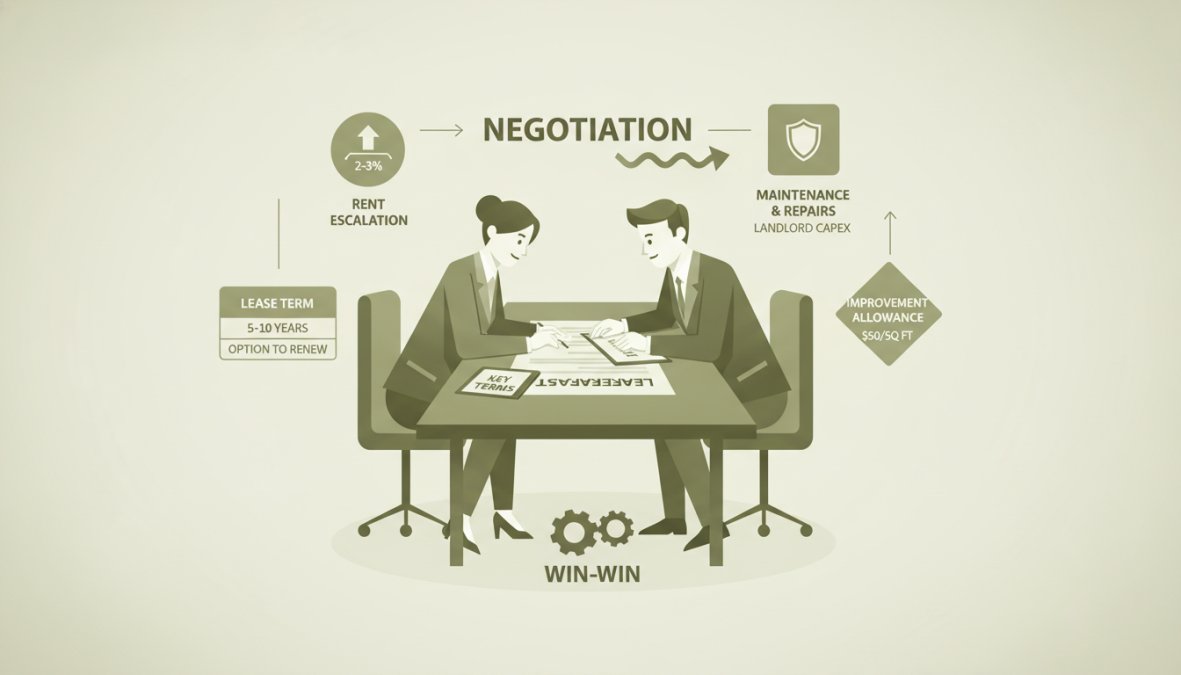
Commercial Lease Negotiation Tips for Better Terms
Negotiating a commercial lease is fundamentally different from negotiating a home purchase. You’re establishing a long-term business relationship with someone who controls your physical workspace.
Landlord vs. Tenant Interests and Covenants
Landlords want reliable, creditworthy tenants who pay on time and maintain the property. Tenants want affordable rent, flexibility to modify the space, and protection from unexpected cost increases.
Covenants are promises each party makes about how they’ll use and maintain the property. A landlord’s covenant includes maintaining the roof, structure, and common areas. A tenant’s covenants typically include maintaining the interior, not making unauthorized alterations, and using the space only for the stated business purpose.
If you’re a retail tenant planning to upgrade the space, negotiate specific provisions about what alterations you can make without landlord approval. Insurance and maintenance covenants deserve particular attention, the lease should specify who maintains HVAC systems, handles pest control, and manages janitorial services.
The most successful lease negotiations happen when both parties understand they’ll need to work together for years. Terms that seem like victories for one side often create resentment and disputes later.
Modern Lease Considerations: Digital Signatures and Post-Pandemic Clauses
Digital signature and electronic execution have become standard. Most commercial leases are now executed electronically using platforms that provide authentication and audit trails.
Post-pandemic leases increasingly include flexibility provisions. Some tenants negotiated the right to reduce their occupied space if they shift to hybrid work models. Force majeure clauses address how rent and other obligations are handled during events beyond either party’s control, including pandemics and government shutdowns.
Some leases now include sustainability provisions, sometimes called "green lease" clauses. These might require the landlord to maintain energy-efficient systems or allow the tenant to install solar panels.
Using a Commercial Lease Agreement Template and Customization
Starting with a template saves time, but templates require careful customization to fit your specific situation. The American Industrial Real Estate Association (AIRE) and Building Owners and Managers Association (BOMA) publish widely-used lease templates that reflect industry standards and have been tested in litigation.
However, using a template as your starting point doesn’t mean accepting every provision unchanged. Review each section and consider whether it protects your interests. Customization should address your specific situation, if the property is in a flood zone, include flood insurance provisions; if the tenant is in a business generating hazardous materials, include environmental compliance requirements.
Common Drafting Mistakes to Avoid When Creating Leases
Years of reviewing commercial leases have shown patterns in how disputes arise. Many problems stem from drafting choices that seemed minor but created major issues later.
Vague Property Descriptions and Missing Assignment Clauses
One of the most common mistakes is describing the leased property in ambiguous ways. Effective property descriptions include the street address, building name, suite or unit number, and square footage. Attach a floor plan showing the exact boundaries of the leased space.
Assignment and subletting clauses address what happens if the tenant wants to transfer their lease to another party. A lease that prohibits assignment without landlord consent gives the landlord control over who occupies the space. A clause requiring landlord consent "not to be unreasonably withheld" balances the landlord’s interest with the tenant’s need for flexibility.
A missing or vague assignment clause creates situations where a tenant is forced to choose between abandoning their business location and continuing to pay rent on space they’ve left.
Inadequate Insurance Requirements and Force Majeure Language
Insurance provisions protect both parties from catastrophic losses. The lease should specify the types and amounts of insurance each party must maintain, a tenant typically carries general liability insurance, while the landlord carries property insurance covering the building structure.
The lease should specify who is named as an additional insured on each party’s policy. Without this language, the landlord might not be covered if a customer is injured in the tenant’s space and sues the landlord.
Force majeure clauses need clearer language about pandemics, government-ordered shutdowns, and other events that prevent normal business operations. A well-drafted force majeure clause specifies what events qualify, how long the clause applies, and what happens to rent obligations.
Why Legal Counsel Matters in Drafting Effective Commercial Leases
A commercial lease is one of the most important contracts your business will sign. A poorly drafted lease can cost tens of thousands of dollars or more if disputes arise or you’re locked into unfavorable terms.
Many business owners try to save money by using templates or negotiating without legal counsel. This approach often backfires. Businesses that use legal counsel in lease negotiations report significantly fewer disputes during the lease term. An experienced commercial real estate attorney reviews the lease from your perspective, identifies provisions that could create problems, and helps you negotiate fair, enforceable terms.
At Matthew Fornaro, P.A., we’ve spent over two decades helping South Florida entrepreneurs and small business owners navigate commercial leases. We review proposed leases before you sign, negotiate on your behalf, and draft custom provisions that protect your interests. Whether you’re a tenant concerned about rent escalation and assignment restrictions or a landlord protecting your property investment, we ensure your lease protects what matters most to your business.
Drafting effective commercial lease agreements requires attention to detail, understanding of legal enforceability, and negotiation skills that protect your interests. Whether you’re establishing a new location or renewing an existing lease, the terms you negotiate today will affect your business for years. Matthew Fornaro, P.A. provides comprehensive lease review and negotiation support tailored to entrepreneurs and small business owners in Coral Springs, Parkland, and throughout South Florida. Our team identifies risks in proposed leases, negotiates stronger terms on your behalf, and ensures your agreement actually protects your business interests. Contact our firm today to discuss your commercial lease and get the legal guidance that prevents costly disputes down the road.
| Lease Element | Key Consideration | Common Mistake |
|---|---|---|
| Property Description | Specific address, suite, square footage | Vague descriptions like "retail space" |
| Rent Structure | Gross vs. triple net vs. escalation | Not defining CAM charges clearly |
| Term and Renewal | Length and renewal options | Automatic renewal without clear notice |
| Default Provisions | Notice period and cure rights | Ambiguous language about what constitutes default |
| Insurance Requirements | Coverage amounts and additional insured status | Missing or inadequate insurance specifications |
| Assignment Clause | Restrictions on lease transfer | Completely omitting assignment provisions |
| Covenants | Maintenance and use restrictions | Unclear about who maintains what systems |
| Dispute Resolution | Mediation or arbitration provisions | No dispute resolution process specified |
Frequently Asked Questions
What are the essential elements of a commercial lease agreement?
A binding commercial lease must include: clearly identified parties (landlord and tenant), detailed property description with zoning compliance notes, rent structure with payment terms and escalation clauses, lease duration and renewal options, security deposit amount, operating expenses or CAM charges if applicable, default provisions, termination rights, insurance requirements, and dispute resolution methods. Without these elements, enforceability may be questioned and disputes will likely arise.
What's the difference between gross and net commercial leases?
In a gross lease, the landlord covers most operating expenses, property taxes, and insurance, rent is a flat amount. In a net lease (single, double, or triple net), tenants pay base rent plus a share of operating expenses, insurance, and/or property taxes (CAM charges). Triple net leases shift the most costs to tenants. Understanding this distinction is critical when drafting effective commercial lease agreements to clarify financial obligations.
How do I negotiate better commercial lease terms as a tenant?
Key negotiation strategies include: securing favorable renewal options and termination rights, capping rent escalation percentages, limiting CAM charge increases, negotiating tenant improvement allowances, clarifying assignment and subleasing rights, and including force majeure protections. Work with legal counsel to understand market rates, propose realistic covenants, and identify areas where landlords may compromise. Document all agreed terms in writing to prevent disputes.
What common drafting mistakes should I avoid in commercial leases?
Avoid vague property descriptions that create boundary disputes, omitting clear assignment and subleasing clauses, failing to define default provisions precisely, neglecting force majeure language, and using outdated templates without digital signature compliance. Don't overlook security deposit terms, indemnification clauses, or dispute resolution methods. Many disputes stem from ambiguous covenants or missing insurance requirements. Professional legal counsel helps catch these errors before signing.
This article was written using GrandRanker


