

Key Takeaways
- Florida business law protects companies from unfair competition, contract breaches, and partner disputes.
- Acting early saves time, money, and business relationships.
- An experienced business attorney helps you assess risk and choose the right legal strategy.
Table of Contents
- What Business Dispute Resolution Lawyers in Broward Do
- How to Resolve a Breach of Contract Dispute in Florida
- Commercial Litigation Attorney in Broward: When to File Suit
- Alternative Dispute Resolution Methods for Businesses
- Cost of Business Litigation in Florida: What to Expect
- Broward-Specific Court Procedures and Local Advantages
- Choosing the Right Business Dispute Resolution Lawyer
- Conclusion
Business Dispute Resolution Lawyers in Broward: Your Complete Guide
Last Updated: July 10, 2026
When business relationships break down, the stakes climb fast. Contracts get breached. Partners stop communicating. Money disappears. That’s where business dispute resolution lawyers broward become essential. At Matthew Fornaro, P.A., we’ve spent over two decades helping South Florida entrepreneurs navigate disputes. Whether you’re facing a contract violation, shareholder conflict, or commercial tort claim, the decisions you make in the next 30 days will determine whether you recover your losses or watch them compound.
This guide walks you through what business dispute resolution looks like in Broward County, the types of disputes we handle, legal strategies that work, alternatives to courtroom warfare, and how to choose the right lawyer.
What Business Dispute Resolution Lawyers in Broward Do
Business dispute resolution isn’t a single service, it’s a collection of strategies designed to protect your interests when conflict emerges. A skilled business dispute resolution lawyer in Broward does far more than file lawsuits. The best ones prevent disputes, contain them when they occur, and guide you toward the resolution method that costs the least and delivers the most.
Types of Business Disputes Handled
Breach of contract claims happen when one party fails to perform obligations under an agreement. Partnership disputes emerge when co-owners disagree on direction, finances, or management. Shareholder conflicts pit investors against each other or against company leadership. Commercial real estate disputes involve property leases, sales agreements, or construction defects. Business torts, fraud, misrepresentation, tortious interference, occur when someone damages your business through wrongful conduct. Construction disputes involve contractors and subcontractors operating under tight timelines. Employment disputes often bleed into business litigation when they involve wrongful termination or theft of trade secrets.
The common thread: someone’s actions have cost you money, opportunity, or reputation. Your lawyer’s job is to quantify that damage and recover it.
Services Beyond the Courtroom
Most business disputes never reach trial. Experienced lawyers know that litigation is expensive, unpredictable, and time-consuming. Contract review and negotiation can resolve disputes before they harden. Demand letters, formal written notices of breach, sometimes shock the other party into settlement. Mediation and arbitration are faster, cheaper, and more private alternatives to court. Litigation remains necessary when negotiation fails, including pleadings, discovery, and trial preparation. Injunctive relief, court orders that force someone to act or stop acting, becomes critical when money damages alone won’t fix the problem.
How to Resolve a Breach of Contract Dispute in Florida
Breach of contract is the most common business dispute we handle. Someone promised to do something and failed. The remedy seems straightforward: make them pay for the loss. The reality is messier.
Steps to Document and Preserve Your Claim
The moment you suspect a breach, document everything. Collect the original contract and any amendments. Identify the specific obligation that was breached with dates and section references. Preserve all communications, emails, text messages, and call logs. Document your damages with invoices, purchase orders, and third-party quotes. Take photos of defective products and get expert inspections.
Send a preservation letter to the other party demanding they preserve all documents and communications related to the dispute. This prevents evidence destruction and demonstrates your seriousness.
Many business owners delay action hoping the problem resolves itself. It rarely does. Document immediately and consult an attorney within 30 days of discovering the breach.
Negotiation and Settlement Pathways
Before filing suit, send a detailed demand letter outlining the breach, your damages, and your demand for payment with a 30-day deadline. Many businesses settle at this stage once they consult their own attorney.
If the demand letter doesn’t work, propose mediation. In mediation, a neutral third party facilitates negotiation without deciding the case. Mediation typically costs $1,500 to $5,000 and can be completed in a single day. Compare that to litigation, which can cost $50,000 to $250,000 and take 18-36 months. Many cases settle in mediation because both parties hear the other side’s perspective and realize their litigation risk.
If mediation fails, you can pursue arbitration (if your contract requires it) or litigation in the 17th Judicial Circuit (Broward County courts).
Commercial Litigation Attorney in Broward: When to File Suit
(/alternatives-commercial-litigation-startups/) Attorney in Broward: When to File Suit]
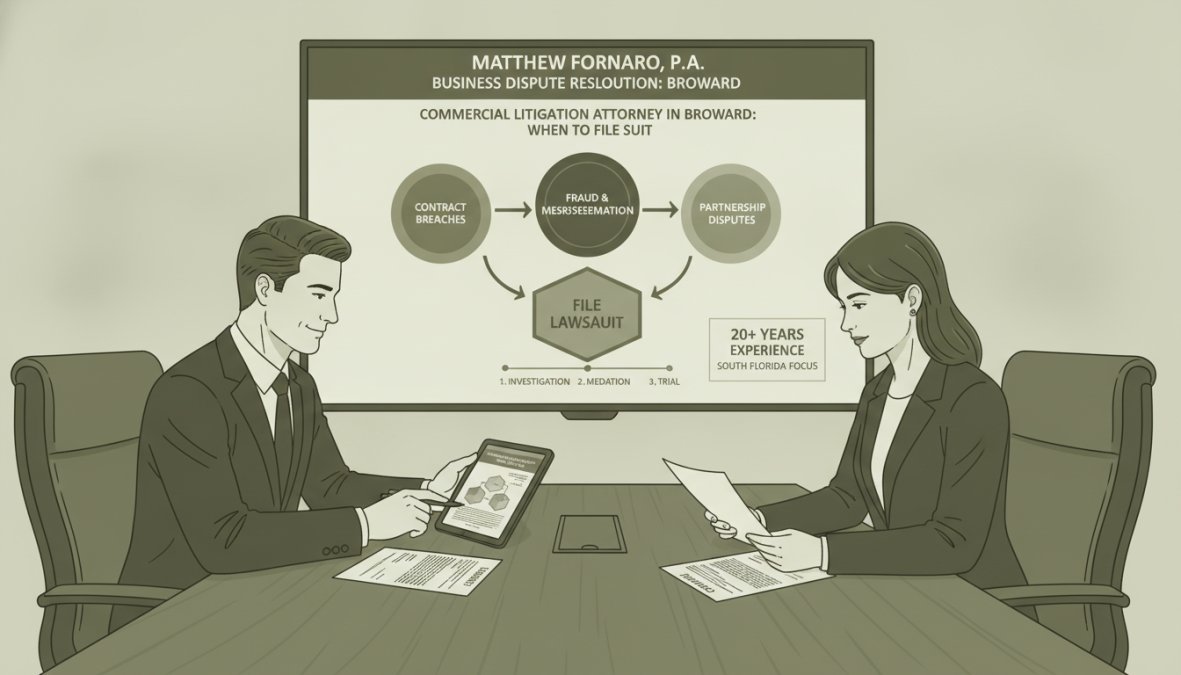
Not every breach warrants a lawsuit. Consider litigation when the amount in dispute exceeds $50,000, the breach is clear and well-documented, the other party has assets to satisfy a judgment, negotiation and mediation have failed, injunctive relief is necessary, or the dispute involves intellectual property or trade secrets.
Breach of Contract Litigation
When you file a breach of contract lawsuit, your attorney drafts a complaint alleging the contract, the breach, and your damages. The defendant has 20 days to respond. Discovery then begins, both sides exchange documents, answer written questions, and sit for depositions. Discovery typically takes 6-12 months. Many cases settle during discovery once both sides see the evidence and develop a realistic sense of their chances at trial.
If settlement doesn’t happen, the case proceeds to trial. You present your evidence to a judge or jury. The judge decides whether a breach occurred and what damages you’re owed.
Partnership and Shareholder Disputes
Partnership disputes are messier than contract disputes because they involve ongoing relationships, tax implications, and sometimes family dynamics. A partnership dispute often requires a forensic accountant to trace money flows and determine whether partners contributed equally. It may require business valuation to determine a fair buyout price.
Shareholder disputes follow similar patterns but involve additional complexity around corporate governance and fiduciary duties. A majority shareholder might freeze out minority shareholders through excessive compensation or unfair dividend distributions. The minority shareholder’s remedy is often a forced buyout or dissolution.
Early mediation often prevents years of litigation.
Business Tort Litigation and Fiduciary Duty Claims
Business torts are wrongful acts that damage your business but don’t involve a contract. Tortious interference with contract occurs when someone deliberately sabotages your business relationship. Fraud involves intentional misrepresentation that causes financial loss. Misappropriation of trade secrets happens when an employee or competitor steals confidential information.
Fiduciary duty claims arise when someone in a position of trust acts in their own interest rather than the company’s. These claims are harder to prove than breach of contract but can result in higher damages, including punitive damages in cases involving fraud or willful misconduct.
Alternative Dispute Resolution Methods for Businesses
Litigation is slow and expensive. For many business disputes, alternative dispute resolution (ADR) methods offer faster, cheaper, and more confidential paths to resolution.
Mediation: A Cost-Effective First Step
Mediation works because it gives both parties control over the outcome. Each side presents their case to a neutral mediator. The mediator identifies common ground and explores settlement options. If both parties agree on terms, you sign a settlement agreement and the dispute is resolved.
Mediation typically costs $2,000 to $5,000 total and takes one day. Compare that to litigation, which often costs $100,000+ and takes 2-3 years. Mediation is confidential, nothing said during mediation can be used in court if the case doesn’t settle.
Mediation succeeds roughly 70-80% of the time in business disputes. If your case settles in mediation, you’ll save 18-24 months and tens of thousands of dollars compared to litigation.
Arbitration: Binding Resolution Without Trial
Arbitration is like a private trial. You and the other party present your case to an arbitrator who hears evidence and issues a binding decision. Arbitration is faster than litigation, typically 6-12 months from filing to decision. It’s more private and often cheaper because you skip lengthy discovery and motion practice.
The downside: arbitration decisions are final and rarely overturned on appeal. For business disputes, arbitration makes sense when speed and privacy matter more than appellate rights.
Cost of Business Litigation in Florida: What to Expect
The cost of business litigation varies based on case complexity, dispute amount, and whether the case settles or goes to trial.
Litigation vs. ADR: A Cost-Benefit Analysis
| Resolution Method | Typical Timeline | Estimated Cost | Best For | Outcome Control |
|---|---|---|---|---|
| Negotiation | 1-3 months | $2,000-$10,000 | Clear breaches, willing parties | Full control |
| Mediation | 1-2 months | $3,000-$8,000 | Disputes where settlement is possible | Shared control |
| Arbitration | 6-12 months | $25,000-$75,000 | Faster resolution, privacy needed | Limited control |
| Litigation | 18-36 months | $75,000-$250,000+ | Injunctive relief needed, precedent matters | Judge/jury decides |
Attorney fees in Broward typically run $200-$400 per hour for experienced commercial litigators. A straightforward breach of contract case might require 100-200 hours of attorney time. Court costs, filing fees, and expert reports add another $10,000-$30,000.
Many attorneys offer flat fees for specific tasks or contingency arrangements where you pay only if you win. The key insight: litigation is expensive, but so is losing a major business dispute. If you’re owed $200,000 and litigation costs $75,000, the math works if you recover most of what you’re owed.
Never choose a cheaper lawyer over a better one when the dispute amount is large. A lawyer who settles your case for $100,000 when you could have recovered $200,000 has cost you far more than their hourly rate.
Broward-Specific Court Procedures and Local Advantages
Litigation in Broward County follows Florida civil procedure rules, but local judges and court practices create advantages for lawyers who understand the system.
The 17th Judicial Circuit and Local Rules
Broward County is part of the 17th Judicial Circuit. Cases are assigned to individual judges, and judge assignment often determines case trajectory. Experienced Broward litigation attorneys know the judges, their tendencies, and local rules. Broward courts handle thousands of commercial cases annually and are relatively efficient. Discovery deadlines are typically 120 days. Mediation is mandatory in most civil cases before trial, which often produces settlements. The 17th Judicial Circuit also has specialized judges for complex commercial litigation.
Preventative Legal Strategies for Business Owners
The best dispute is the one that never happens. Smart business owners invest in preventative legal strategies that reduce dispute risk.
Start with clear, detailed contracts that specify what each party will do, by when, and what happens if they don’t. Include dispute resolution clauses requiring negotiation, then mediation, then arbitration or litigation. Require written amendments to contracts. Keep detailed records of performance. Use independent contractors carefully with clear written agreements. Protect intellectual property with non-disclosure agreements and non-compete clauses. Have a succession plan and review insurance coverage to ensure it’s adequate.
Choosing the Right Business Dispute Resolution Lawyer
Not all business lawyers are created equal. Some specialize in transactional work; others specialize in litigation. Within litigation, some focus on specific areas like construction disputes or intellectual property.
What to Look for in Legal Representation
Experience matters most. A lawyer who has handled dozens of cases similar to yours knows the pitfalls and shortcuts. Ask about specific experience: How many breach of contract cases have they tried? What were the outcomes?
Assess their approach to your specific dispute. Do they immediately recommend litigation, or do they explore alternatives? The best lawyers match the resolution method to your goals and the dispute’s characteristics.
Understand their fee structure and whether they’ll cap fees or offer alternative billing. Evaluate communication, will they return your calls promptly and explain legal concepts in plain English? Check references by asking past clients about responsiveness and results.
At Matthew Fornaro, P.A., we bring over 20 years of experience resolving business disputes for South Florida entrepreneurs. We specialize in commercial litigation, breach of contract claims, partnership disputes, and business torts. We know Broward County courts and effective dispute resolution strategies. We combine aggressive advocacy with pragmatic settlement negotiations, ensuring you recover what you’re owed while controlling costs and timeline.
Business disputes test your patience, drain your finances, and distract you from running your business. The right legal counsel makes all the difference. Whether you’re facing a breach of contract, partnership conflict, or commercial tort claim, Matthew Fornaro, P.A. provides the experienced guidance and aggressive advocacy you need. With over two decades of experience in Broward County business litigation, we understand the local court system and the strategies that recover your losses. Call today for a consultation and learn how we can protect your business interests.
Frequently Asked Questions
What types of business disputes can be resolved through alternative dispute resolution?
Most commercial disputes can be resolved through mediation or arbitration, including breach of contract, partnership disagreements, shareholder conflicts, and commercial real estate disputes. ADR works well when parties want to avoid trial costs and maintain business relationships. However, disputes involving injunctive relief or cases requiring immediate court intervention may need litigation. A business dispute resolution lawyer in Broward can evaluate your specific situation and recommend the most effective approach for your circumstances.
How much does a commercial litigation attorney in Broward typically charge?
Legal fees depend on the complexity of your case, the dispute's value, and your attorney's experience. Most business litigation attorneys in Florida charge hourly rates, flat fees for specific services, or contingency arrangements. Initial case evaluations help determine the likely cost structure. For accurate pricing information tailored to your specific dispute, contact a local business law firm directly. Discussing fee arrangements upfront helps you understand the financial commitment required for your litigation or dispute resolution.
What is the difference between mediation and arbitration for business disputes?
Mediation involves a neutral third party helping both sides reach a voluntary agreement, either party can walk away if no settlement is reached. Arbitration is more formal; an arbitrator hears evidence and issues a binding decision similar to a court judgment. Mediation typically costs less and preserves business relationships, while arbitration provides faster resolution than trial but is binding. Your choice depends on whether you want settlement flexibility (mediation) or final, enforceable resolution (arbitration). A commercial litigation attorney can advise which method suits your dispute.
How do I resolve a breach of contract dispute without going to trial?
Start by documenting the breach in writing and reviewing your contract for dispute resolution clauses. Send a formal demand letter outlining the breach and your damages claim. Many contracts require mediation or negotiation before litigation. If direct negotiation fails, consider mediation with a neutral third party. Arbitration offers another alternative if your contract includes an arbitration clause. These approaches preserve confidentiality, reduce costs, and often resolve disputes faster than trial. Consulting a business dispute resolution lawyer in Broward ensures you follow proper procedures and protect your legal rights throughout the process.
This article was written using GrandRanker


