

Key Takeaways
- Florida business law protects companies from unfair competition, contract breaches, and partner disputes.
- Acting early saves time, money, and business relationships.
- An experienced business attorney helps you assess risk and choose the right legal strategy.
Contract rescission is defined as the legal process of voiding a contract entirely, treating it as though it never existed and restoring both parties to their original positions before the agreement was made. Unlike contract termination, which ends obligations going forward, rescission nullifies all past and future obligations. This distinction matters enormously for business owners and individuals who discover a contract was flawed from the start. Understanding what is contract rescission, when it applies, and how to pursue it correctly can mean the difference between recovering your losses and being stuck with a bad deal.
What is contract rescission and how does it work?
Rescission voids a contract as though it never existed and requires both parties to return any benefits they received. This is called restitution, and it is not optional. If you received payment, goods, or services under the contract, you must return them or their equivalent value.
Rescission is classified as an equitable remedy in American contract law. Courts treat it differently from a simple breach of contract claim because it asks a judge to undo the entire agreement, not just award money damages. The standard industry term for this concept is “rescission ab initio,” meaning rescission from the beginning.
Contract annulment is sometimes used interchangeably with rescission, though annulment more commonly appears in family law contexts. In commercial agreements, rescission is the correct and recognized term. Knowing the precise vocabulary matters when you are filing a legal claim or drafting a demand letter.
What legal grounds justify contract rescission?
Only specific legal grounds justify rescission. Changing your mind, regretting a deal, or finding a better price elsewhere does not qualify. Courts recognize the following grounds:
- Fraudulent inducement: One party lied about a material fact to get the other to sign.
- Material misrepresentation: A false statement of fact, even without intent to deceive, that influenced the agreement.
- Mutual mistake: Both parties were wrong about a fundamental fact at the time of contracting.
- Unilateral mistake with knowledge: One party made a mistake, and the other party knew about it.
- Duress or undue influence: One party was pressured or manipulated into signing.
- Lack of legal capacity: A minor or a person with a mental impairment signed the contract.
- Illegality: The contract required one or both parties to do something illegal.
- Impossibility: An unforeseen event made performance objectively impossible.
Each ground requires documented evidence. A court will not rescind a contract based on a party’s word alone. You need written communications, financial records, witness statements, or expert testimony to support your claim.
Pro Tip: If you suspect fraud or misrepresentation, preserve all emails, texts, and documents immediately. Courts weigh evidence heavily, and spoliation of records can destroy an otherwise valid rescission claim.
How does the rescission process work in practice?
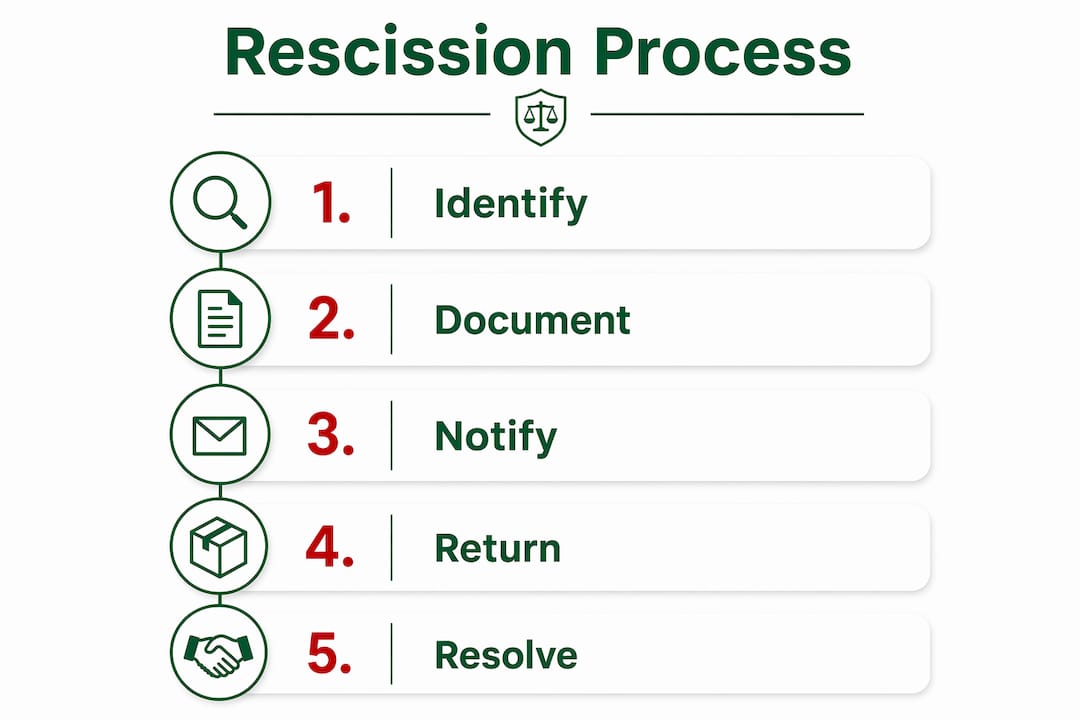
Pursuing rescission follows a clear sequence of steps, though the exact path depends on whether both parties agree or whether you need a court order.
- Identify valid grounds. Confirm that your situation meets one of the recognized legal grounds. Consult an attorney before sending any notice.
- Stop accepting benefits. Continued acceptance of contract benefits can ratify the contract and eliminate your right to rescind. Stop using goods, services, or payments tied to the agreement immediately.
- Send written notice. Deliver a formal rescission notice to the other party. The notice must clearly state the grounds for rescission and your intent to void the contract.
- Offer restitution. Tender back any benefits you received. Courts require this step before granting rescission. Failing to offer restitution weakens your claim significantly.
- Negotiate mutual rescission. Mutual rescission is the fastest route to resolve the dispute. Both parties agree on terms, formalize the voiding in writing, and define return obligations. This avoids litigation costs and delays.
- File for judicial rescission. If the other party refuses, you may file a lawsuit seeking a court order. Courts exercise discretion based on fairness and the strength of your evidence.
Timing is critical throughout this process. Rescission claims are highly time-sensitive, and delays can forfeit your rights under legal doctrines like laches and estoppel. Acting promptly after discovering grounds is not just advisable. It is legally necessary.
Consumers have an additional statutory option in certain situations. Under the FTC Cooling-Off Rule, buyers may rescind specific types of contracts within three business days, after which sellers must issue a refund within 10 days. Federal law also extends rescission rights in mortgage transactions covered by the Truth in Lending Act, where lenders must return money within 20 days after receiving a valid rescission notice.
Pro Tip: Review your contract for cancellation clauses before sending any rescission notice. Those clauses often specify required notice periods, cure windows, and surviving obligations that affect your legal position.
What are the differences between rescission, termination, and cancellation?
These three concepts are related but legally distinct. Confusing them leads to costly mistakes.
| Concept | Effect on contract | Obligations | Damages available |
|---|---|---|---|
| Rescission | Voids contract from the beginning | Full restitution required | Limited; contract treated as never existing |
| Termination | Ends contract going forward | Past obligations remain | Yes; breach damages may apply |
| Cancellation | Defined by contract terms | Depends on cancellation clause | Varies by contract language |
Rescission wipes the slate clean. Termination does not. When a contract is terminated, the parties remain bound by obligations that arose before the termination date. A vendor who delivered goods before termination can still collect payment for those goods.
Cancellation is the most variable of the three. Cancellation clauses in contracts outline how and when a party can exit, often requiring advance notice, cure periods, and specifying which obligations survive. A poorly drafted cancellation clause can leave one party exposed to claims they did not anticipate.
Failure to follow strict procedural notice requirements when canceling a contract can trigger breach claims or compensatory damages against the canceling party. This is why reading the contract’s exit provisions carefully before taking any action is non-negotiable. Fornarolegal regularly advises South Florida businesses on commercial contract review before they sign, precisely to avoid these traps.
One more distinction worth noting: partial rescission is generally not permitted. Rescission is all or nothing. If you want to modify only part of an agreement, the correct remedy is contract reformation or renegotiation, not rescission.
What are key strategic considerations when pursuing rescission?
Rescission is a powerful remedy, but it carries real risks when pursued carelessly. These are the most important strategic factors to manage.
- Act immediately after discovering grounds. Ratification by continued acceptance of contract benefits can extinguish rescission rights even when valid grounds existed from the start. Every day you continue performing under the contract weakens your position.
- Document everything before you act. Rescission is an equitable remedy subject to judicial discretion. Courts weigh fairness alongside legal grounds. Strong, organized evidence is the foundation of a successful claim.
- Pursue mutual rescission first. The most effective rescission outcomes arise from mutual agreements that avoid expanded legal costs and delays. A negotiated exit is faster and cheaper than litigation.
- Understand the restitution obligation. You cannot rescind and keep the benefits. If you received $50,000 in services, you must account for that value. Courts will not grant rescission to a party seeking an unfair windfall.
- Avoid improper cancellation. Legal risk increases dramatically when rescission is attempted without strict adherence to notice and procedural clauses. An improperly executed rescission can flip you from plaintiff to defendant.
- Get legal counsel before sending any notice. A rescission notice is a legal document with binding consequences. Sending one without understanding its implications is one of the most common and expensive mistakes business owners make.
For businesses navigating contract disputes in Florida, early resolution strategies often prevent rescission claims from escalating into full litigation. The mortgage and consumer lending context adds another layer of complexity, particularly for agreements covered by consumer protection frameworks that extend statutory rescission rights beyond standard contract law.
Rescission in practice: what I’ve learned after 20 years
The most common mistake I see is a business owner who discovers fraud or misrepresentation in a contract and immediately keeps using the services or accepting payments while they “figure out what to do.” By the time they call me, they have ratified the contract through their own conduct. The grounds were valid. The window closed.
Rescission is not a remedy you can pursue at your convenience. Courts treat delay as a signal that the harm was not serious enough to act on. Laches doctrine gives judges the authority to deny rescission simply because you waited too long, even when the underlying grounds are solid.
The second mistake I see regularly is treating rescission and termination as interchangeable. A client once sent a “termination notice” when they actually needed rescission. Termination left them liable for pre-termination obligations they thought they had escaped. The contract language mattered, and they had not read it carefully before acting.
Mutual rescission agreements, when both parties recognize the contract was flawed, are genuinely the cleanest outcome. I have negotiated dozens of them. They are faster, cheaper, and far less damaging to business relationships than courtroom battles. The key is getting to the table quickly, with clear documentation of what each party received and what must be returned.
Contract disputes in Florida can move fast once litigation begins. The businesses that fare best are the ones who called before sending any notice, not after.
— Matthew
Fornarolegal’s approach to contract rescission disputes
Contract rescission disputes require precise timing, documented evidence, and a clear understanding of Florida contract law. Fornarolegal has represented South Florida businesses, startups, and entrepreneurs in contract disputes for over 20 years, from initial contract review through trial.

Whether you are considering rescission, responding to a rescission demand, or trying to understand your options after a deal goes wrong, Matthew Fornaro provides direct, practical guidance without unnecessary delay. Before any dispute becomes a lawsuit, use the Florida owner’s dispute checklist to assess your position. For businesses in Broward County and surrounding areas, local counsel services are available for contract disputes, rescission claims, and commercial litigation. Contact Fornarolegal before you act, not after.
FAQ
What does rescission mean in a contract?
Rescission means voiding a contract entirely so that it is treated as if it never existed. Both parties must return any benefits received under the agreement.
What are valid legal grounds for rescission?
Valid grounds include fraud, material misrepresentation, mutual mistake, duress, undue influence, lack of legal capacity, and illegality. Regret or a change of mind does not qualify.
How is rescission different from termination?
Rescission voids the contract from the beginning and requires full restitution. Termination ends the contract going forward but leaves past obligations intact.
Can you rescind only part of a contract?
Partial rescission is generally not permitted. Rescission applies to the entire contract. Parties seeking to modify only a portion of an agreement must pursue contract reformation instead.
How long do you have to rescind a contract?
No universal deadline applies, but courts apply doctrines like laches and estoppel to deny rescission when a party delays unreasonably after discovering valid grounds. Acting promptly is legally necessary.
Key takeaways
Contract rescission voids an agreement entirely from its inception, requiring full restitution from both parties, and courts will deny the remedy when a party delays, ratifies the contract through conduct, or fails to meet strict procedural requirements.
| Point | Details |
|---|---|
| Rescission voids from the start | The contract is treated as if it never existed, and all benefits must be returned. |
| Valid grounds are specific | Fraud, misrepresentation, mistake, duress, incapacity, and illegality qualify. Regret does not. |
| Timing is non-negotiable | Delays and continued performance can permanently eliminate your right to rescind. |
| Mutual rescission is the best path | Negotiated agreements avoid litigation costs and resolve restitution obligations faster. |
| Rescission differs from termination | Termination ends future obligations only. Rescission unwinds the entire agreement. |
Recommended
- Before the Dispute: How Florida Businesses Can Reduce Contract Risk » Matthew Fornaro, P.A. Coral Springs Parkland Business Law
- Florida Business Contract Review Checklist: What Owners Must Verify Before Signing » Matthew Fornaro, P.A. Coral Springs Parkland Business Law
- Florida Commercial Contract Renewal Pitfalls: What Businesses Should Review Before Extending an Agreement » Matthew Fornaro, P.A. Coral Springs Parkland Business Law
- What Is a Contract Void? A Guide for South Florida


