

Key Takeaways
- Florida business law protects companies from unfair competition, contract breaches, and partner disputes.
- Acting early saves time, money, and business relationships.
- An experienced business attorney helps you assess risk and choose the right legal strategy.
Table of Contents
- Understanding Florida’s Two-Party Consent Framework
- Florida Wiretapping Law and Statutory Penalties
- Penalties for Illegal Recording in Florida
- Florida Recording Laws Exceptions and Legal Scenarios
- Florida Business Call Recording Laws and Workplace Policies
- Digital, VoIP, and App-Based Recording in Florida
- Common Mistakes and What You Should Not Do
- When to Consult Legal Counsel About Recording Laws
Florida Call Recording Law: Your Complete 2026 Guide
Last Updated: July 20, 2026
Understanding Florida’s call recording law is essential for anyone recording phone conversations for business, personal protection, or litigation. Florida imposes strict two-party consent requirements, meaning all parties must consent before recording. Violations carry severe penalties: criminal felony charges, substantial civil damages, and inadmissibility of evidence in court. This guide explains what the law permits and prohibits, helping you stay compliant.
Understanding Florida’s Two-Party Consent Framework
Florida’s call recording law requires all parties to a conversation to consent before any recording can legally occur, as codified in Florida Statute § 934.03. Unlike one-party consent states where a single participant can record without notifying others, Florida requires explicit knowledge and agreement from every person on the call.
The two-party consent requirement applies to wire communications (telephone transmissions), oral communications (conversations with reasonable expectation of privacy), and electronic communications (emails, texts, instant messages). Understanding these distinctions matters because penalties and admissibility rules vary by communication type.
What Constitutes Wire, Oral, and Electronic Communications
Wire communications include calls over telephone lines, VoIP systems, and cellular networks. Oral communications are conversations where participants reasonably expect privacy, a private phone call qualifies, but a loud conversation in a crowded restaurant may not. Electronic communications cover text messages, emails, and data transmitted through digital platforms. Recording any of these without consent from all participants violates the statute.
When recording a call with multiple participants, document who consented and when. A simple email confirmation from each party stating they agree to recording creates a clear compliance record and protects you if disputes arise later.
The Reasonable Expectation of Privacy Standard
The statute protects communications where participants reasonably expect their words will not be intercepted or recorded. Courts examine location, conversation nature, steps taken to ensure privacy, and whether third parties could overhear. A phone call between two people carries a reasonable expectation of privacy even in a public place because the content is not audible to bystanders. The burden is on the person doing the recording to prove no reasonable expectation of privacy existed. Consent is the safest approach in virtually all scenarios.
Florida Wiretapping Law and Statutory Penalties
Florida’s wiretapping statute, Fla. Stat. § 934.03, carries both criminal and civil penalties. Willfully intercepting, attempting to intercept, or procuring someone else to intercept any wire, oral, or electronic communication is illegal. Interception means capturing communication content as it transmits, recording a phone call in real time, capturing an email before delivery, or recording a video conference without participant knowledge.
Criminal Penalties and Felony Charges
Unlawful interception is a third-degree felony, carrying up to 5 years in prison and up to $5,000 in fines. A second or subsequent offense elevates to a second-degree felony: up to 15 years in prison and up to $10,000 in fines. The statute also criminalizes using information obtained through unlawful interception. If you record a call illegally and then use that recording, you’ve committed an additional crime.
Recording a call and sharing it without the other party’s consent results in charges for both unlawful interception and unauthorized use of intercepted information.
Civil Liability and Statutory Damages
Any person whose communication is unlawfully intercepted can sue for actual damages, profits gained by the wrongdoer, and punitive damages. Civil liability is not capped. An employee suing a company for recording her private calls can recover actual damages plus punitive damages designed to punish the company’s conduct. The statute also provides recovery of litigation costs, including reasonable attorney fees. For a small business, a single employee lawsuit could cost $50,000 to $150,000 in legal fees alone, before any settlement or judgment.
Penalties for Illegal Recording in Florida
Third-Degree Felony Charges and Prosecution
Willfully intercepting any wire, oral, or electronic communication without consent is a third-degree felony. This means up to 5 years in state prison, up to $5,000 in fines, a permanent criminal record, loss of certain professional licenses, and immigration consequences for non-citizens. The term “willfully” means the person knew the recording was unauthorized and did it anyway.
Admissibility of Illegally Recorded Evidence in Court
Florida courts have a clear rule: evidence obtained through unlawful interception is inadmissible in any legal proceeding, as codified in Fla. Stat. § 934.09. A business owner who records a customer complaint call without consent cannot introduce that recording as evidence in court, even if it proves the customer made false statements. The only narrow exception is recordings made by law enforcement pursuant to a court order or warrant.
Florida Recording Laws Exceptions and Legal Scenarios
One-Party Consent and Your Own Participation
You can record a conversation you’re participating in if you consent to the recording. Many businesses disclose recording through a recorded message: “This call may be recorded for quality assurance purposes. If you do not consent to recording, please hang up now.” If the customer stays on the line, courts typically find implied consent. Simply recording a conversation you’re on without telling anyone is illegal.
Recording in Public Places and Expectation of Privacy
A common misconception is that anything said in a public place can be recorded without consent. If two people are having a private conversation in a coffee shop, they likely have a reasonable expectation of privacy in their conversation. However, if someone is giving a public speech in a town square, there is no reasonable expectation of privacy, and recording that speech does not violate Florida’s recording law.
Obtaining Proper Consent: Practical Steps for Legal Recording
For phone calls: Use a recorded disclosure message before the conversation begins. “This call may be recorded for quality assurance purposes. By continuing this call, you consent to recording.” Document the date, time, and parties to the call.
For in-person conversations: Inform the other party before recording begins and get explicit agreement, preferably in writing or on the recording itself.
For video calls and virtual meetings: Include a notice in the meeting invitation: “This meeting will be recorded. Participants consent to recording by joining.”
For business communications: Establish a clear recording policy in employee handbooks and customer service agreements. Keep records of when, where, with whom, and for what purpose you recorded.
For South Florida businesses, include your recording policy in customer service agreements and employee onboarding materials. A one-page acknowledgment form signed by employees and customers creates a clear consent record that protects you in disputes.
Florida Business Call Recording Laws and Workplace Policies
Recording Corporate Support Lines and Customer Interactions
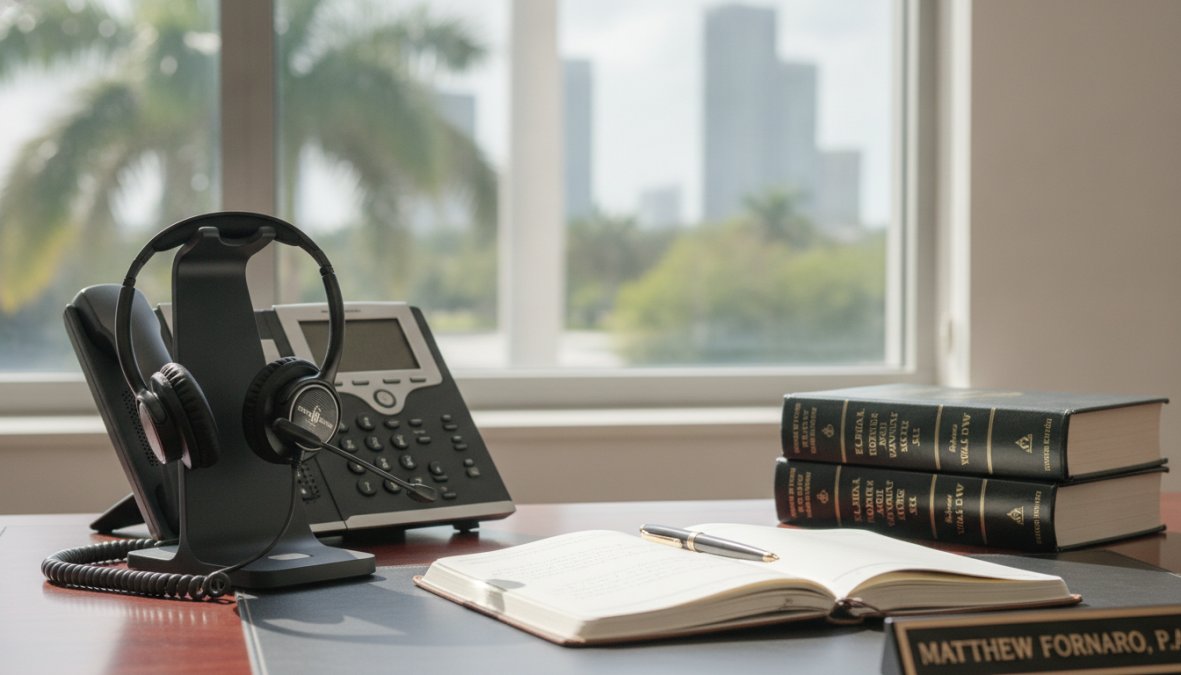
Businesses can record customer service calls for quality assurance, training, and dispute resolution, but only with proper consent. The standard approach is a recorded message: “This call may be recorded for quality assurance purposes. Press 1 to continue, or hang up to decline recording.” If a customer presses 1 or stays on the line after hearing the disclosure, courts treat this as implied consent. The recording must be retained securely and used only for legitimate business purposes.
Workplace Recording Policies and Employee Consent
Employers can record employee conversations, but only with consent. A common approach is to include a recording policy in the employee handbook: “The company may record employee phone calls and virtual meetings for training and compliance purposes. By accepting employment, you consent to recording.” Courts have found that employees who sign an acknowledgment form consenting to recording have waived their privacy rights regarding recorded conversations. Best practice: adopt a clear recording policy, distribute it to all employees, require acknowledgment, and apply it consistently.
Interstate Calls and Multi-State Recording Compliance
When a call involves parties in different states, the recording must comply with the strictest law of any state involved. If you’re in Florida (two-party consent) and call someone in another state, you must comply with both states’ requirements. The safest approach is to always obtain two-party consent, which complies with any state’s recording law.
Digital, VoIP, and App-Based Recording in Florida
Recording Phone Calls Through Apps and Software
Recording software like Google Voice, Zoom, Microsoft Teams, and third-party call recording applications are subject to Florida’s recording laws. Using software to record a call without the other party’s consent is illegal, regardless of the software’s capability. Best practice: send a calendar notice that the meeting will be recorded, or begin the meeting with an announcement: “This meeting is being recorded. If you do not consent, please disconnect now.”
VoIP Platforms and Electronic Communication Recording
VoIP calls are treated as wire communications under Florida law. Recording a VoIP call without consent is as illegal as recording a traditional phone call. Electronic communications transmitted through chat, email, or instant messaging platforms are also protected. For businesses using VoIP systems or digital communication platforms, obtain consent before recording, disclose the recording to all participants, and use recordings only for legitimate business purposes.
Common Mistakes and What You Should Not Do
Mistake 1: Assuming you can record because you’re a participant. You can record yourself, but you cannot secretly record others.
Mistake 2: Recording “for your own protection” without consent. That recording is illegal and cannot be used as evidence.
Mistake 3: Recording a call and then sharing it. This compounds the violation; the person you share it with can also face criminal charges.
Mistake 4: Assuming public place means no privacy expectation. A conversation in a public place can still be private.
Mistake 5: Using recording software without disclosure. Apps and software are subject to the same consent requirements as any other recording method.
Mistake 6: Recording employees without a clear policy. Always have a written policy that employees acknowledge.
Mistake 7: Recording calls with out-of-state parties and assuming one-party consent applies. If you’re in Florida, Florida’s two-party consent law applies regardless of where the other party is located.
When to Consult Legal Counsel About Recording Laws
Consult an attorney if you’ve already recorded something and are unsure if it was legal; you’re developing a recording policy for your business; someone has recorded you without consent and is using the recording against you; you’re involved in litigation and opposing counsel has submitted a recording as evidence; or you’ve been contacted by law enforcement regarding an alleged recording violation.
At Matthew Fornaro, P.A., we help South Florida entrepreneurs and business owners navigate recording law compliance and defend against recording-related claims. With over 20 years of experience representing businesses in Coral Springs, Parkland, and throughout Broward County, we understand the practical challenges of Florida’s two-party consent requirement. Contact our office for a consultation.
Recording laws in Florida are strict but clear. The two-party consent requirement means you need permission from everyone on a call before recording. Businesses that ignore this requirement face criminal prosecution, civil lawsuits, and exclusion of evidence. Compliance is straightforward: disclose recording to all participants, obtain consent, document the consent, and use recordings only for legitimate purposes.
| Recording Scenario | Legal Status | Compliance Requirement |
|---|---|---|
| Recording a call you’re on without telling the other party | Illegal | Disclose and obtain consent before recording |
| Recording a customer service call with disclosure | Legal | Use recorded message: “This call may be recorded. Continue = consent” |
| Recording an employee without a policy or consent | Illegal | Adopt written policy, distribute to employees, get acknowledgment |
| Recording a video meeting without notifying participants | Illegal | Send notice in advance or announce at meeting start |
| Recording an in-person private conversation secretly | Illegal | Inform the other party and get explicit consent before recording |
| Recording a public speech or address | Likely legal | No reasonable expectation of privacy in public address |
| Recording an out-of-state call (you’re in Florida) | Illegal without consent | Comply with Florida’s two-party consent requirement |
| Recording a call and sharing it with others | Illegal | Never share recordings without consent from all parties |
Frequently Asked Questions
Is Florida a two-party consent state for recording calls?
Yes. Florida is a two-party consent state under Fla. Stat. § 934.03. This means all parties to a conversation must consent before you can legally record it. Unlike one-party consent states where only one person needs to agree, Florida requires explicit consent from everyone involved. Violating this law can result in criminal charges and civil liability.
What are the penalties for illegal recording in Florida?
Illegally recording a conversation in Florida is a third-degree felony. Penalties include up to 5 years in prison and fines up to $5,000. Additionally, victims can pursue civil damages. If the recording involves a minor or is used for extortion, charges may escalate to a second-degree felony with harsher penalties. Civil liability can result in statutory damages beyond criminal prosecution.
What exceptions exist to Florida’s recording consent requirement?
Key exceptions include: recording conversations where you are a party to the call (one-party consent applies); recordings made in public places where there is no reasonable expectation of privacy; and recordings authorized by law enforcement with proper warrants. However, surreptitious recording of private conversations remains illegal even in public settings if privacy is reasonably expected. Always consult legal counsel for specific scenarios.
Can I record business calls with customers or vendors in Florida?
Only with proper consent from all parties. For customer support lines, you must disclose that recording is occurring and obtain agreement. For vendor calls, all participants must consent. Many businesses use written policies and verbal disclosures at the start of calls to establish consent. Interstate calls complicate this, you must comply with the strictest law among all states involved, so consent requirements may be higher than Florida’s baseline.
Are recordings made through apps or VoIP subject to Florida recording laws?
Yes. Digital calls, VoIP platforms, and app-based communications (like Zoom, Teams, or WhatsApp) are treated as electronic communications under Florida law and subject to the same two-party consent requirement. Recording these conversations without all participants’ consent violates Fla. Stat. § 934.03. The method of communication does not change the legal obligation to obtain consent from everyone involved.
Will an illegally recorded conversation be admissible as evidence in court?
Generally, no. Illegally recorded evidence is typically inadmissible in Florida courts. Beyond exclusion from trial, the person who made the illegal recording may face criminal prosecution and civil liability. Courts take privacy violations seriously. If you have evidence obtained through illegal recording, consult a defense attorney immediately, as using it could expose you to additional legal consequences.
What should I do if I need to record a conversation legally in Florida?
First, obtain explicit consent from all parties before recording. Disclose your intent clearly, verbal disclosure at the start of a call or written notification works. For business contexts, implement a formal workplace recording policy. For sensitive matters, have all parties sign a consent form. If the call involves multiple states, comply with the strictest law. When in doubt, consult with legal counsel to ensure compliance with Fla. Stat. § 934.03 and avoid criminal or civil liability.
Florida Statute § 934.03 on interception of communications
Federal Wiretap Act, 18 U.S.C. § 2511, overview and state variations
Recording Laws by State: Two-Party vs. One-Party Consent
This article was written using GrandRanker
Florida is commonly called a two-party consent state, but “all-party consent” is more precise. Unless a statutory exception applies, Florida law permits a person to intercept a wire, oral, or electronic communication only when all parties have given prior consent. For an in-person oral conversation, Chapter 934 generally protects the conversation only if the speaker actually expected it to remain private and that expectation was reasonable under the circumstances. Secretly recording a protected conversation can create criminal and civil exposure. See Fla. Stat. §§ 934.02(2), 934.03(1), (2)(d), and 934.10.
Do not assume that the other state’s one-party rule controls. Interstate calls can implicate the laws of more than one state, and the governing-law analysis depends on facts such as where each participant spoke, where the recording occurred, and where a claim is brought. Florida courts have treated the interception of a Florida participant’s words as occurring in Florida even when the recorder was elsewhere. The prudent business practice is to obtain prior consent from every participant before recording an interstate call.
The statute requires prior consent; it does not prescribe magic words. Clear, affirmative consent is the safest and easiest form to prove. For example, disclose that the call or meeting will be recorded, identify the purpose, and ask each participant to agree before recording begins. A statement that a call “may be recorded,” followed only by silence or continued participation, may lead to a fact-specific dispute over consent. Businesses should use a recorded keypress, a written acknowledgment, or an express verbal “yes,” and retain a reliable record of the consent.
Not automatically. A public location is only one factor. Florida’s definition of a protected “oral communication” asks whether the speaker actually expected the conversation not to be intercepted and whether that expectation was justified. A public speech or a conversation intentionally audible to bystanders is less likely to be protected; a quiet conversation arranged to remain private may be protected even in a public setting. Because the analysis is fact-specific, obtain consent when there is doubt.
An intentional violation of Fla. Stat. § 934.03(1) is generally a third-degree felony, punishable by up to five years’ imprisonment and a fine of up to $5,000. The statute contains limited lesser-penalty provisions for certain first-offense radio interceptions, but those provisions should not be described as a general exception for ordinary call recording. A person whose communication was unlawfully intercepted, disclosed, or used may also pursue civil relief, including actual damages or statutory liquidated damages of at least $1,000 (calculated as the greater of $100 per day of violation or $1,000), punitive damages, reasonable attorney’s fees, and litigation costs. See Fla. Stat. §§ 934.03(4), 934.10, 775.082, and 775.083.
A business should not rely on undisclosed recording. Florida law includes a fact-specific “business extension” exclusion involving qualifying telephone equipment used in the ordinary course of business, and courts have applied it in some business-call cases. It is not a blanket license to record secretly. The safer compliance protocol is to give notice and obtain affirmative prior consent before recording starts, for example through a keypress or express verbal agreement, and to maintain a record of that consent. A business should also address employee notice, retention, access, security, and permitted uses in a written recording policy.
The family relationship alone does not create an exception. If the conversation is protected by Chapter 934 and no statutory exception applies, prior consent from all parties is required. Florida law contains narrow exceptions for specified circumstances, including certain recordings by a child or a parent or guardian concerning sexual abuse or physical force or violence against the child, and certain communications received in violation of an active injunction or court order. Those exceptions have detailed conditions and do not authorize secret family recordings generally.
Generally, not in a Florida proceeding. Fla. Stat. § 934.06 provides that the contents of an unlawfully intercepted wire or oral communication, and evidence derived from it, may not be received in evidence if disclosure would violate Chapter 934. The statute expressly excepts prosecutions for criminal interception. Admissibility can still depend on the type of communication, how it was obtained, the forum, and the purpose for which it is offered. Do not use, disclose, or distribute a recording of uncertain legality without legal advice.
Chapter 934 addresses wire, oral, and electronic communications, so it is not limited to traditional phone calls. Recording the audio portion of a video call or a private in-person meeting may be covered, depending on the technology and the circumstances. Silent video, by itself, generally is not an interception under Chapter 934, although other privacy, surveillance, employment, or criminal laws may apply. Texts and emails can qualify as electronic communications while in transmission, but receiving, saving, or screenshotting a message sent to you is not automatically the same as intercepting it.
This material is for general informational purposes only and is not legal advice. Recording laws are fact-specific and may vary by jurisdiction. Consult qualified counsel about a particular recording, policy, or dispute.


