

Key Takeaways
- Florida business law protects companies from unfair competition, contract breaches, and partner disputes.
- Acting early saves time, money, and business relationships.
- An experienced business attorney helps you assess risk and choose the right legal strategy.
Most founders treat legal counsel as a break-glass option. You call a lawyer when something breaks, when a investor demands clean documents, or when a dispute lands in your inbox. That instinct is understandable and also one of the most expensive habits a startup can develop. The role of legal counsel in startups goes far beyond crisis response. Attorneys embedded early in your business can prevent the ownership disputes, IP losses, and contract traps that quietly kill companies before they ever reach Series A. This article covers what legal counsel actually does at each stage of startup growth and how to use that relationship strategically.
Table of Contents
- Key takeaways
- The role of legal counsel in startups starts at formation
- Contracts and daily legal operations
- Protecting intellectual property as a startup asset
- Ongoing counsel as a strategic business partner
- Avoiding common startup legal pitfalls
- My perspective on legal counsel and startup success
- How Fornarolegal supports South Florida startups
- FAQ
Key takeaways
| Point | Details |
|---|---|
| Start legal early | Early legal support around structure, IP, and founder agreements prevents costly problems during funding rounds. |
| Contracts need ongoing attention | Legal counsel creates templates and manages agreements across vendors, employees, and partners to reduce daily risk. |
| IP protection is proactive | Assigning intellectual property correctly from day one protects your most valuable asset before disputes arise. |
| Fractional counsel is a real option | Outside general counsel gives startups ongoing legal support without the cost of a full-time hire. |
| Prevention beats crisis management | Ongoing legal guidance costs far less than fixing avoidable disputes, fines, or investor due diligence failures. |
The role of legal counsel in startups starts at formation
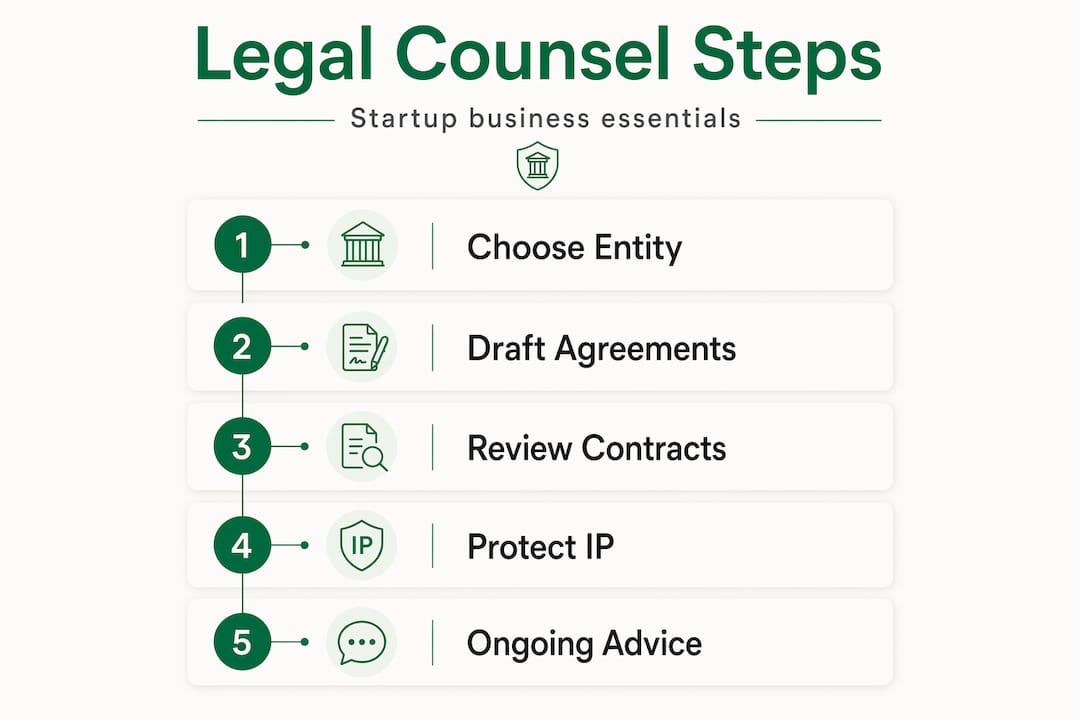
Most founders think formation is simple. Pick an entity, file some papers, and move on. In reality, what you decide in those first few weeks creates the legal architecture your entire company runs on. Get it wrong and you will be rebuilding it later at three times the cost and under investor scrutiny.
A qualified legal advisor for startups begins by helping you choose an entity structure that actually fits your goals. A Delaware C-corp and a Florida LLC are not interchangeable. One is standard for venture-backed companies; the other works better for smaller, profitable businesses that plan to stay private. That single decision affects your tax treatment, investor eligibility, and exit options for the life of the company.
Beyond entity choice, early legal support focuses on ownership documentation, IP assignments, founder vesting, and organized records that investors can trust. Founder vesting schedules matter more than most people realize. Without a clear vesting agreement, a co-founder who leaves after six months can walk away with 25% of your company and no obligation to stay. That kind of structural gap does not surface until it becomes a catastrophe.
Intellectual property assignment is the other piece that founders routinely skip. If a developer builds your core product before signing an IP assignment agreement, the company may not actually own that code. Courts have ruled against startups on exactly this point. Getting assignments documented early, before contributions blur and memories fade, is one of the clearest examples of how well-structured early documentation reduces investor scrutiny and dispute risk down the line.
- Choose an entity structure aligned with your funding and exit goals
- Document founder contributions, equity percentages, and vesting schedules in writing
- Execute IP assignment agreements with every founder and early contractor
- Draft a shareholders’ agreement or operating agreement that defines decision-making authority
- Organize cap table records from day one so due diligence does not become a fire drill
Pro Tip: If you are working with a technical co-founder before any legal documents are signed, get an IP assignment executed immediately. A handshake does not transfer copyright.
Contracts and daily legal operations
Your startup will sign dozens of contracts in its first year. Non-disclosure agreements, master service agreements, software licenses, employment agreements, contractor agreements, and partnership deals are all common before you hit your second product launch. Each one carries risk. Most founders either sign whatever the other side sends or copy a template from the internet and hope for the best.

Legal counsel changes that dynamic completely. Rather than reviewing every contract from scratch, a good attorney builds a library of standard templates your team can use for routine deals. This kind of playbook approach, where legal creates pre-approved contract frameworks, is how ongoing counsel manages contracts and IP to support operational growth without creating a bottleneck on every deal.
Here is what that looks like in practice:
- Your attorney drafts a standard NDA you can send to any vendor or potential partner without review.
- A master service agreement template covers your most common client relationships, with guidance on which terms are negotiable and which are not.
- Employment agreements include legally compliant offer letters, IP assignment clauses, and non-solicitation provisions appropriate for your state.
- Your attorney reviews any inbound contract above a defined dollar threshold or involving unusual terms.
- A contract log tracks renewal dates, termination windows, and key obligations so nothing falls through the cracks.
Employment law deserves specific attention as your team grows. Misclassifying a worker as an independent contractor when they function as an employee creates liability under both state and federal law. In Florida, the standards are specific and the penalties are real. Early legal guidance on classification, benefits compliance, and handbook policies keeps you out of the employment disputes that derail fast-growing companies.
Pro Tip: Never let speed pressure you into signing a contract without at least a one-page summary of the key risk terms from your attorney. Most disputes trace back to documents no one read carefully at signing.
Protecting intellectual property as a startup asset
For most startups, intellectual property is the business. Your code, brand, product design, or proprietary process is what investors are actually buying. Yet IP protection is frequently treated as an afterthought, something to address when you have more money or more time.
The role of attorneys in startups shifts meaningfully when IP strategy enters the picture. It moves from documentation and compliance into something closer to competitive strategy. Here is how the key IP decisions stack up:
| IP Situation | When to Get Formal Legal Opinion | Notes |
|---|---|---|
| Pending funding round with patent risk | Yes, formal opinion advised | Formal opinions reduce exposure during investor diligence |
| Credible infringement threat received | Yes, required | Critical evidence against willful infringement claims |
| Early-stage product, iterating rapidly | Informal review first | Formal opinions may not be cost-effective yet |
| Non-litigious industry, no known risk | Monitor only | Not always cost-effective for low-risk environments |
| Pre-acquisition due diligence | Yes, formal opinion advised | Clean IP chain is a deal requirement |
One thing founders consistently misunderstand: a formal patent opinion does not prevent anyone from suing you. What it does is give you evidence that you acted in good faith, which can significantly reduce your exposure to willful infringement damages if a lawsuit does come. That distinction matters because some founders treat patent opinions as litigation insurance and then feel blindsided when they still get sued.
Your attorney can also guide you on design-around strategies, meaning how to build or modify your product to avoid infringing on a competitor’s patent. That kind of proactive IP strategy for startups is far cheaper than licensing negotiations or litigation after the fact.
Ongoing counsel as a strategic business partner
There is a significant difference between calling a lawyer when something goes wrong and having counsel who understands your business well enough to flag problems before they happen. Proactive legal support keeps legal protections growing alongside the business, preventing lawsuits, fines, and disputes before they start.
For most early-stage startups, the answer is fractional or outside general counsel. This model gives you cost-effective continuity, strategic advice, contract management, and governance support without the $250,000-plus salary of a full-time general counsel. You get an attorney who sits effectively on your leadership team, coordinates with your accountant and CFO, and handles both routine matters and complex situations as they arise.
“Legal counsel is becoming a core strategic partner rather than just an advisor, embedded directly into daily operations as new technologies like AI increase legal complexity.” — Law.com
That shift toward embedded legal thinking is accelerating in 2026. AI tools are generating contracts, flagging compliance issues, and analyzing risk at speeds no human team can match. But AI raises expectations for attorneys to operate at the intersection of law, technology, and business strategy, not just produce documents. For founders, that means your attorney should be someone who understands your industry and your technology, not just someone who can draft a contract.
Legal counsel also plays a coordination role that most founders underestimate. When legal and financial records are aligned, investor due diligence moves faster, M&A processes hit fewer snags, and governance documentation holds up under scrutiny. That alignment between your attorney and your accountant is one of the clearest signs of a company that is built to scale.
Avoiding common startup legal pitfalls
Knowing that legal counsel matters is different from knowing how to use it well. Here are the most common mistakes founders make and what to do instead:
- Waiting too long to engage. The best time to hire a legal advisor for startups is before you sign your first co-founder agreement, not after the first dispute.
- Using generic online templates without review. Templates are a starting point. They are not a substitute for advice tailored to your state, industry, and specific deal terms.
- Treating legal as a one-time task. Entity formation is not the end of your legal work. It is the beginning. Compliance, contracts, and employment law need ongoing attention as you grow.
- Skipping employment classification analysis. Calling someone a contractor does not make them one legally. Get a classification review before you scale your team.
- Ignoring governance documents. Board consent resolutions, meeting minutes, and cap table updates seem bureaucratic. Investors will read every one of them during due diligence.
- Separating legal from business decisions. The most effective founders bring their attorney into strategic conversations early, not after the deal is already structured.
For guidance on expanding legally, the principles are the same at every stage: build the legal infrastructure before you need it, not while you are scrambling to fix what broke.
My perspective on legal counsel and startup success
I have worked with startups and entrepreneurs across South Florida for over 20 years. The pattern I see most often is not willful negligence. It is founders who genuinely believe that legal work can wait until the business generates enough revenue to justify the cost. By the time they call me, they have a handshake co-founder arrangement that is now the subject of a dispute, an employment misclassification claim, or an investor who found a gap in their IP documentation and is now using it as a pricing lever.
What I have learned is that legal costs are almost always lower at the beginning than at the remediation stage. The founders who invest in a few hours of structured legal work during formation and maintain an ongoing relationship with counsel spend a fraction of what reactive clients spend over the same period.
The AI conversation is real too. I see it changing what clients expect from counsel and what smart founders ask for. The question is no longer just “is this contract enforceable?” It is “what does this deal mean for our regulatory posture in 18 months, given where the technology is going?” That kind of forward-looking legal thinking is only possible when the attorney knows your business well enough to see around corners.
My honest advice: treat legal counsel as infrastructure, the same way you treat your accounting and your technical stack. It is not glamorous. But it is what holds everything else together.
— Matthew
How Fornarolegal supports South Florida startups
At Fornarolegal, we work with startups and entrepreneurs across South Florida who need legal support that moves at the speed of their business. Whether you are structuring your company for the first time, managing a complex vendor contract, or preparing for a funding round, we provide the kind of practical, court-tested guidance that protects your company without slowing it down. Matthew Fornaro brings over 20 years of experience to every engagement, with an AV® rating that reflects both legal ability and client trust. If you are ready to build a legal foundation that scales with your business, start with our guide to expanding your business legally and see how proactive counsel changes the equation.
FAQ
What does legal counsel do for a startup?
Legal counsel helps startups form the right entity structure, document founder agreements, protect intellectual property, draft and review contracts, and stay compliant with employment and regulatory requirements. The role evolves from foundational setup to ongoing strategic support as the business grows.
When should a startup hire legal counsel?
The best time to engage a legal advisor is before you sign any co-founder, investor, or vendor agreements. Early legal support prevents ownership disputes, IP gaps, and documentation failures that are far more expensive to fix during later funding rounds.
What is fractional general counsel for startups?
Fractional or outside general counsel provides ongoing legal contact, contract management, and strategic advice without the cost of a full-time hire. It is a practical model for startups that need consistent legal support but are not yet ready to bring an attorney in-house.
Do startups need a formal patent opinion?
Not always. Formal patent opinions are most valuable when facing a credible enforcement threat or preparing for a funding round. They reduce exposure to willful infringement damages but do not prevent lawsuits, so the decision should be based on your specific risk profile and industry.
How does legal counsel help during fundraising?
Attorneys prepare and organize the documentation investors will review during due diligence, including cap table records, governance documents, IP assignments, and employment agreements. Clean, well-structured records reduce friction and often speed up the closing timeline.
Recommended
- Miami Corporate Lawyer for Startups: Your Guide to a Strong Legal Foundation » Matthew Fornaro, P.A.
- Matthew Fornaro, P.A. Featured on ABNewswire | South Florida Business Law
- A Founder’s Guide to Hiring a Lawyer for Your Business Startup » Matthew Fornaro, P.A.
- Preventing Business Litigation: The Critical Role of Early Legal Guidance » Matthew Fornaro, P.A.


