

Key Takeaways
- Florida business law protects companies from unfair competition, contract breaches, and partner disputes.
- Acting early saves time, money, and business relationships.
- An experienced business attorney helps you assess risk and choose the right legal strategy.
Responding to a business litigation notice means filing a formal written reply to a civil lawsuit served on your company, and in Florida, you have exactly 20 days to do it before a default judgment can be entered against you. That deadline is not a suggestion. Under Florida Rule 1.140, failure to serve a written answer within 20 days of service allows the plaintiff to seek entry of default, which can result in a court-ordered judgment against your business without any hearing on the merits. The standard industry term for this process is filing a “responsive pleading,” and every South Florida business owner who has been served needs to understand both the procedural mechanics and the strategic decisions that follow. This guide covers each critical step, from the moment you receive the summons to what happens after your answer is filed.
How to respond to a business litigation notice: what you must do first
The summons and complaint package is your navigation tool for the entire case. It identifies the court, the parties, the specific claims against your business, the damages sought, and the deadlines you must meet. Read it carefully and note every date referenced.
Your first call after reading the complaint should be to an experienced South Florida business litigation attorney. Early lawyer involvement prevents the costly procedural mistakes that sink otherwise defensible cases. An attorney can assess the strength of the claims, identify available defenses, and take over deadline management so nothing slips through.
Notify your insurance carriers immediately. General liability, professional liability, and errors and omissions policies often cover litigation defense costs, but prompt claim notification is a condition of coverage. Missing your insurer’s internal notice deadline can void your right to a defense even when the underlying claim is covered.
The final prerequisite is implementing a litigation hold. A litigation hold is a legal obligation to preserve all evidence relevant to the lawsuit the moment you receive notice. That means suspending any routine document destruction policies and preserving emails, contracts, text messages, invoices, and internal communications related to the dispute.
Key prerequisites at a glance:
- Read the summons and complaint to identify the court, claims, and deadlines
- Retain a business litigation attorney in South Florida before the deadline passes
- Notify all relevant insurance carriers and document the date of notification
- Issue a litigation hold covering all digital and physical records related to the dispute
- Gather contracts, correspondence, and transaction records that relate to the claims
Pro Tip: Check whether your insurance policy has a notice deadline shorter than Florida’s 20-day court deadline. Insurance notice deadlines may differ from court deadlines and require separate, prompt action to secure coverage.
How do you file a proper written response in Florida?
Florida’s procedural rules are strict, and the filing process has no margin for error. Florida Rule 1.140 requires defendants to serve a written answer within 20 days after service of the original process and initial pleading. If you waive formal service, that window extends to 60 days. Either way, the clock starts the moment you are served, not the moment you open the envelope.
A proper answer must address each numbered allegation in the complaint. Your attorney will either admit, deny, or state that you lack sufficient knowledge to admit or deny each claim. The answer also asserts your affirmative defenses, which are legal arguments that can defeat or limit the plaintiff’s claims even if their factual allegations are true. Common affirmative defenses in Florida business cases include statute of limitations, failure of consideration, and accord and satisfaction.
The consequences of missing the deadline are severe. Under Florida Rule 1.500, a plaintiff can request a clerk’s default when a defendant fails to respond. Once a clerk’s default is entered, the court can enter a default judgment, meaning the plaintiff wins automatically on liability. Ignoring a litigation notice leads to automatic losses through default judgments that are often permanent and difficult to reverse.
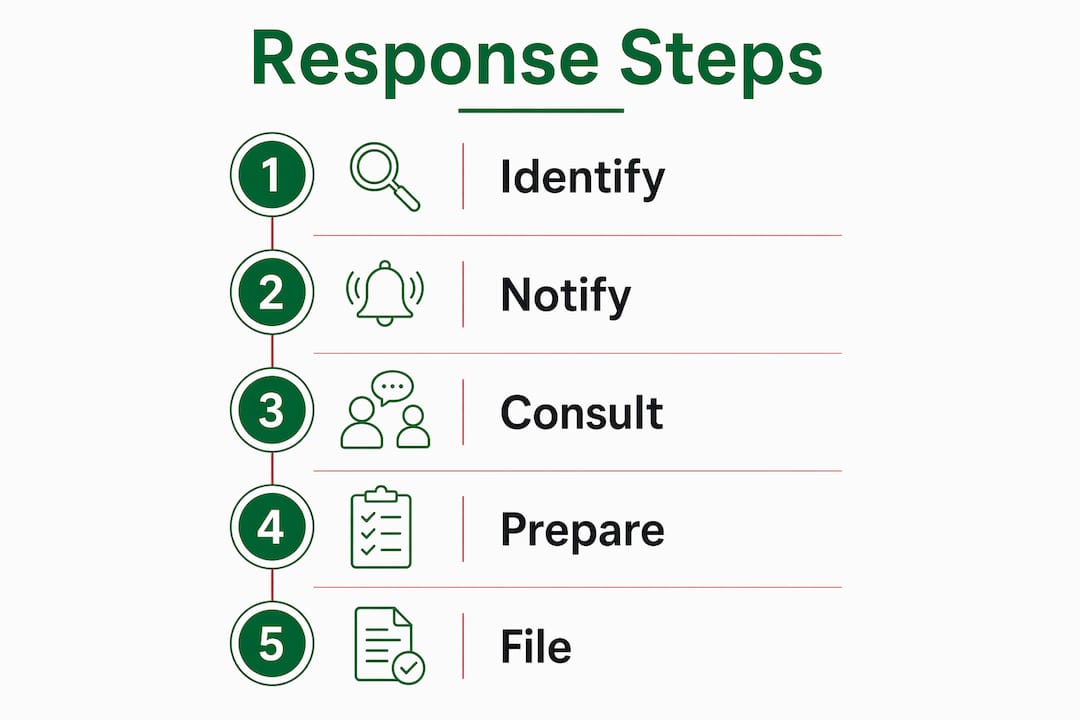
Steps to file your written response:
- Retain litigation counsel immediately after receiving the complaint
- Have your attorney review all claims and identify applicable defenses
- Draft an answer that admits, denies, or contests each numbered allegation
- Assert all affirmative defenses in the same pleading to avoid waiving them
- File the answer with the correct Florida court and serve a copy on the plaintiff’s attorney within the 20-day window
- Confirm filing with a time-stamped court receipt
Pro Tip: Filing any legally sufficient response within 20 days preserves your defense rights even if your full legal strategy is still developing. A timely but incomplete answer beats a perfect answer filed one day late.
What are the best practices for communication and evidence preservation?
After you receive a litigation notice, every word you say or write about the dispute becomes potential evidence. Florida litigation guidelines recommend routing all substantive communication through your legal counsel to prevent unintended admissions. Do not call the plaintiff. Do not email their attorney directly. Do not discuss the case with employees who are not directly involved in the defense.
Social media is a particular trap for business owners. A post celebrating a contract win, a comment about a difficult client, or even a photo from a business event can be pulled into discovery and used against you. Courts treat publicly available social media content as fair game, and plaintiffs’ attorneys routinely search for it. The safest rule is to say nothing publicly about any matter that touches the lawsuit.
“All substantive communications related to the litigation should flow through your attorney. One informal email to the opposing party can waive a defense, create an admission, or undermine months of legal strategy.”
Internal communications also require discipline. Instruct employees not to discuss the case in emails, text messages, or chat platforms unless directed by counsel. Those communications are discoverable, and casual internal commentary about the lawsuit can create problems that did not exist in the original complaint.
Evidence preservation checklist:
- Issue a written litigation hold notice to all relevant employees immediately
- Preserve emails, contracts, invoices, text messages, and any data related to the dispute
- Suspend automatic deletion or archiving programs that might destroy relevant records
- Restrict access to sensitive case-related documents to those directly involved in the defense
- Document every step of your evidence preservation process in writing
What should you expect after filing your response?
Filing your answer is not the end of the process. It is the beginning of a structured procedural timeline that your attorney will manage on your behalf. Florida Rule 1.280 requires initial discovery disclosures within 60 days of complaint service. Discovery is the formal exchange of evidence between parties, and it includes written interrogatories, document requests, and depositions.
Insurance coordination becomes more active at this stage. Your insurer may assign a defense attorney, or they may agree to reimburse your chosen counsel. Either way, you need to keep your carrier informed of every significant development, including settlement discussions, because some policies require insurer consent before you can settle a claim.
Dispute resolution options are worth exploring early. Florida courts require mediation in most civil cases before trial, and many business disputes resolve at mediation without ever reaching a courtroom. Arbitration is another option if your underlying contract includes an arbitration clause, which many commercial agreements do.
| Post-response stage | What to expect |
|---|---|
| Discovery (60 days post-service) | Exchange of documents, interrogatories, and depositions begin |
| Insurance coordination | Insurer assigns or approves counsel; coverage scope confirmed |
| Mediation | Court-ordered in most Florida civil cases before trial |
| Settlement discussions | Can occur at any stage; insurer consent may be required |
| Trial preparation | Begins if mediation fails; typically 12 to 18 months post-filing |
Pro Tip: Review your contracts now for arbitration clauses. If the dispute arose from a written agreement, arbitration may be faster and less expensive than full civil litigation, and your attorney can file a motion to compel arbitration early in the case.
For a broader view of how to manage a business dispute before it reaches this stage, Fornarolegal has published detailed guidance specific to Florida business owners.
Key takeaways
Responding to a business litigation notice in Florida requires a timely written answer, immediate insurance notification, a litigation hold, and disciplined communication protocols to protect your defense rights.
| Point | Details |
|---|---|
| 20-day filing deadline | Florida Rule 1.140 requires a written answer within 20 days of service or default can be entered. |
| Litigation hold obligation | Preserve all relevant emails, contracts, and records immediately upon receiving notice. |
| Insurance notification | Notify your carrier promptly; missing their internal deadline can void your defense coverage. |
| Communication discipline | Route all substantive communications through counsel to avoid unintended admissions. |
| Post-response timeline | Discovery begins within 60 days; mediation is required in most Florida civil cases before trial. |
What I’ve learned after 20 years of Florida business litigation
Most of the business owners I work with at Fornarolegal do not lose their cases because their legal position is weak. They lose ground because they waited too long to act. I have seen owners spend weeks trying to resolve the dispute informally with the opposing party after being served, only to discover they had already missed the 20-day window. A default judgment had been entered before they ever called an attorney.
The procedural rules in Florida are not designed to be forgiving. Florida’s 24-hour action plan for business disputes exists precisely because the first day after service is the most consequential. Every hour you delay is an hour your opponent’s attorney is building their case while yours has not started.
I also want to push back on the instinct to handle early communications yourself. Business owners are problem-solvers by nature, and the impulse to pick up the phone and work things out is understandable. But one informal conversation with the opposing party or their counsel can waive a defense, create an admission, or lock you into a position that limits your options for months. Let your attorney be the voice of your business in litigation.
The owners who fare best are the ones who treat a litigation notice the way they would treat a fire alarm. They do not stand around debating whether it is serious. They act immediately, get the right people involved, and follow a clear protocol. That mindset is what separates a manageable legal dispute from a catastrophic one.
— Matthew
How Fornarolegal helps South Florida businesses respond to litigation

Receiving a litigation notice is one of the most time-sensitive situations your business will face. Fornarolegal represents small businesses, startups, and established companies across South Florida in exactly these situations. Matthew Fornaro, P.A. brings over 20 years of court-tested experience to litigation response preparation, insurance coordination, and dispute resolution strategy. The firm’s AV®-rated representation means you get senior-level attention from the moment you call, not a paralegal working from a checklist.
If you have been served, start with Fornarolegal’s pre-litigation checklist to understand where you stand, then contact the firm directly to protect your 20-day deadline.
FAQ
What is the deadline to respond to a business lawsuit in Florida?
Florida Rule 1.140 requires a written answer within 20 days of service of the original complaint. If you waive formal service, the deadline extends to 60 days.
What happens if I miss the deadline to reply to a litigation notice?
Under Florida Rule 1.500, the plaintiff can request a clerk’s default, which allows the court to enter a default judgment against your business without a trial on the merits.
Do I need an attorney to file a business lawsuit response in Florida?
Technically no, but practically yes. Florida’s procedural rules require precise pleading, and a defective answer or missed affirmative defense can permanently harm your case. Fornarolegal and similar South Florida litigation counsel handle these filings routinely.
Should I notify my insurance company when I receive a litigation notice?
Yes, and you should do it the same day you are served. Insurance notice deadlines are often shorter than court deadlines, and failing to notify your carrier promptly can forfeit your right to a covered defense.
What common mistakes should I avoid after receiving a litigation notice?
The most damaging mistakes are missing the 20-day filing deadline, communicating directly with the opposing party, and failing to implement a litigation hold. Fornarolegal’s guide on costly litigation mistakes covers each of these in detail for Florida business owners.
Recommended
- How to Respond to a Business Dispute Before It Escalates in Florida » Matthew Fornaro, P.A.
- How to Respond to a Business Dispute Before It Escalates in Florida » Matthew Fornaro, P.A.
- Florida Business Litigation: Identify and Manage Emerging Legal Threats Before They Escalate » Matthew Fornaro, P.A.
- Effective Strategies to Resolve Business Litigation in Florida—Fast, Fair, and Focused on Your Bottom Line » Matthew Fornaro, P.A.


